
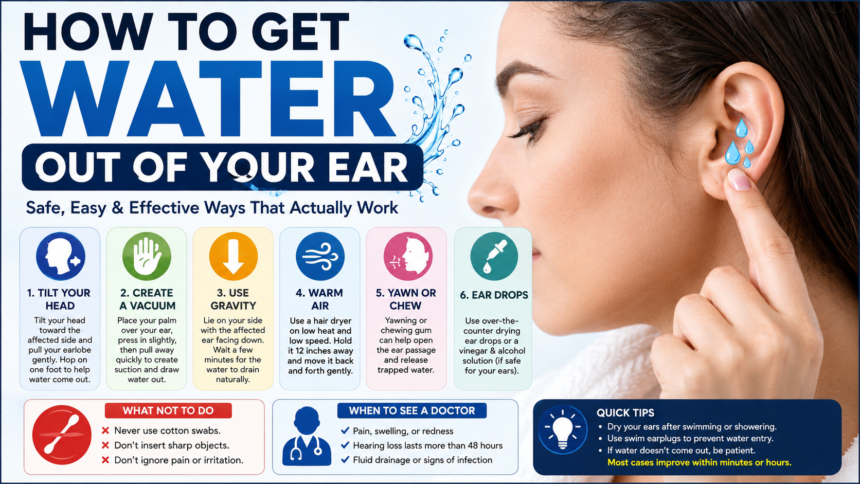
Few things are more annoying than feeling water trapped inside your ear after swimming, showering, or washing your hair. The sensation can make sounds seem muffled, create discomfort, and sometimes even lead to irritation or infection if the water stays trapped for too long.
- Why Water Gets Trapped in Your Ear
- Common Signs of Water Trapped in the Ear
- How to Get Water Out of Your Ear Quickly
- 1. Tilt Your Head and Pull Your Earlobe
- 2. Create a Vacuum with Your Hand
- 3. Use Gravity
- 4. Try the Yawning or Chewing Technique
- Using Warm Air to Remove Water
- The Valsalva Maneuver
- Using Over-the-Counter Ear Drops
- A Homemade Drying Solution
- What Not to Do
- Can Trapped Water Cause an Ear Infection?
- How Long Does Water Stay Trapped?
- Preventing Water from Getting Trapped
- When to See a Doctor
- Frequently Asked Questions
- Can water stay in your ear overnight?
- Is trapped water dangerous?
- Can sleeping on your side help?
- Should I use cotton swabs?
- What’s the fastest way to remove trapped water?
- Final Thoughts
If you’re wondering how to get water out of your ear, the good news is that several simple and safe techniques can usually solve the problem within minutes. Understanding what works—and what to avoid—can help you remove trapped water without damaging your ear.
Why Water Gets Trapped in Your Ear
Water can become stuck in the outer ear canal after exposure to water. This happens more often when swimming, but it can also occur during a shower or bath.
The shape of your ear canal sometimes creates a small pocket where water cannot easily drain out. People who wear earbuds frequently or have narrow ear canals may experience this problem more often.
As the saying goes, “A small drop of water can cause a surprisingly big distraction.” Anyone who has dealt with trapped water knows exactly how true that is.
Common Signs of Water Trapped in the Ear
Before learning how to get water out of your ear, it’s helpful to recognize the symptoms.
You may notice:
- A clogged or full sensation
- Muffled hearing
- Tickling inside the ear
- Popping sounds
- Mild discomfort
- Water moving when you tilt your head
These symptoms are usually temporary and improve once the water drains.
How to Get Water Out of Your Ear Quickly
Several safe techniques can help release trapped water.
1. Tilt Your Head and Pull Your Earlobe
This is often the simplest solution.
Tilt your head toward the affected side while gently pulling on your earlobe. This straightens the ear canal and may allow the water to drain naturally.
Try hopping lightly on one foot while keeping your head tilted if the water does not come out immediately.
Many swimmers use this method because it is quick, easy, and requires no special tools.
2. Create a Vacuum with Your Hand
Another effective answer to how to get water out of your ear is using gentle suction.
Place your palm firmly over the affected ear. Press inward slightly and then pull away quickly.
This motion can create a vacuum effect that helps draw trapped water out of the canal.
Repeat several times while keeping your head tilted downward.
3. Use Gravity
Sometimes the simplest solution is patience.
Lie on your side with the affected ear facing downward. Rest your head on a towel and remain in that position for several minutes.
Gravity often does the work naturally and allows trapped water to drain out without any effort.
This method works particularly well after showers.
4. Try the Yawning or Chewing Technique
Yawning and chewing gum can help open the passages connected to the ear.
These movements encourage pressure changes that may help water escape from the ear canal.
If a yawn doesn’t happen naturally, try opening your mouth wide several times.
Many people find this method surprisingly effective when combined with head tilting.
Using Warm Air to Remove Water
Warm air can help evaporate trapped moisture.
Set a hair dryer to the lowest heat and fan setting. Hold it at least 12 inches away from your ear and gently move it back and forth.
Pull your earlobe slightly while directing the airflow toward the ear canal.
The warmth helps speed up evaporation while reducing the trapped sensation.
Never use high heat because the skin inside the ear is sensitive.
The Valsalva Maneuver
The Valsalva maneuver can sometimes help if pressure is preventing water from draining.
To do this:
- Close your mouth.
- Pinch your nostrils shut.
- Gently exhale through your nose.
You should feel a slight popping sensation.
Be gentle and avoid blowing too hard, as excessive pressure can irritate the ear.
Using Over-the-Counter Ear Drops
If you’re frequently searching for how to get water out of your ear, specially formulated drying ear drops may help.
These products typically contain ingredients that encourage evaporation and reduce moisture buildup.
They are commonly used by swimmers and people who spend significant time in the water.
Always follow package instructions carefully.
A Homemade Drying Solution
Some people use a mixture of equal parts rubbing alcohol and white vinegar.
The alcohol helps water evaporate, while the vinegar may help discourage bacterial growth.
Only use this method if:
- You have no ear pain
- You do not have an ear infection
- You do not have a ruptured eardrum
- Your ears are otherwise healthy
Place a few drops into the ear, wait briefly, and then tilt your head to drain.
If you have any concerns about your ear health, consult a healthcare professional before trying this method.
What Not to Do
Knowing what to avoid is just as important as knowing how to get water out of your ear.
Never Use Cotton Swabs
Cotton swabs often push water deeper into the ear canal.
They can also scratch delicate skin and increase the risk of infection.
Avoid Sharp Objects
Hairpins, keys, fingernails, and other objects should never be inserted into the ear.
These items can damage the ear canal or eardrum.
Don’t Ignore Persistent Symptoms
If water remains trapped for several days, it may require medical attention.
Ignoring the problem can sometimes lead to complications.
As many doctors remind patients, “The ear is self-cleaning and self-protecting—until we start poking things into it.”
Can Trapped Water Cause an Ear Infection?
Yes, it can.
Water that stays in the ear for extended periods creates a moist environment where bacteria can grow.
This condition can contribute to swimmer’s ear, a common outer ear infection.
Signs of infection include:
- Pain
- Redness
- Swelling
- Drainage
- Itching
- Hearing changes
If these symptoms appear, contact a healthcare professional.
How Long Does Water Stay Trapped?
In many cases, trapped water drains within minutes or a few hours.
Occasionally, it may remain for a day or two, especially if the ear canal is narrow or swollen.
If symptoms last longer than 24–48 hours despite trying several safe methods, professional evaluation may be necessary.
Preventing Water from Getting Trapped
Prevention is often easier than treatment.
Wear Swim Earplugs
Specially designed swim earplugs help keep water out during swimming and water sports.
They are particularly useful for people who experience recurring problems.
Dry Your Ears After Swimming
Use a towel to gently dry the outer ear immediately after water exposure.
Tilting your head from side to side can help remove excess moisture.
Consider a Swim Cap
A snug swim cap can provide an additional barrier against water entering the ears.
Competitive swimmers often combine earplugs and swim caps for extra protection.
Use Preventive Drying Drops
Some swimmers use drying drops after water activities to reduce moisture buildup.
This can be especially helpful if trapped water is a frequent issue.
When to See a Doctor
Most cases resolve on their own, but medical attention is recommended if:
- Pain develops
- Hearing becomes significantly reduced
- Symptoms last more than 48 hours
- Fluid continues draining
- You experience dizziness
- You suspect an infection
A healthcare professional can safely remove trapped debris, evaluate the ear canal, and recommend treatment if necessary.
Frequently Asked Questions
Can water stay in your ear overnight?
Yes. In some cases, water remains trapped overnight and drains naturally the next day.
Is trapped water dangerous?
Usually not. However, prolonged moisture can increase the risk of infection.
Can sleeping on your side help?
Yes. Sleeping with the affected ear facing downward often allows gravity to assist drainage.
Should I use cotton swabs?
No. Cotton swabs frequently push water deeper into the ear and may cause injury.
What’s the fastest way to remove trapped water?
For many people, tilting the head, pulling the earlobe, and creating a gentle vacuum with the palm provide the quickest results.
Final Thoughts
Knowing how to get water out of your ear can save you from hours of discomfort after swimming or showering. Simple techniques such as tilting your head, creating gentle suction, using gravity, or applying warm air are often enough to solve the problem safely.
Most trapped water clears on its own, but persistent symptoms should never be ignored. By using safe removal methods and avoiding common mistakes like cotton swabs, you can protect your ears and reduce the risk of infection.
The next time water gets stuck, remember that patience and the right technique usually work far better than force. A few careful steps are often all it takes to restore comfort and clear hearing.
Also Read: Media Watcher