
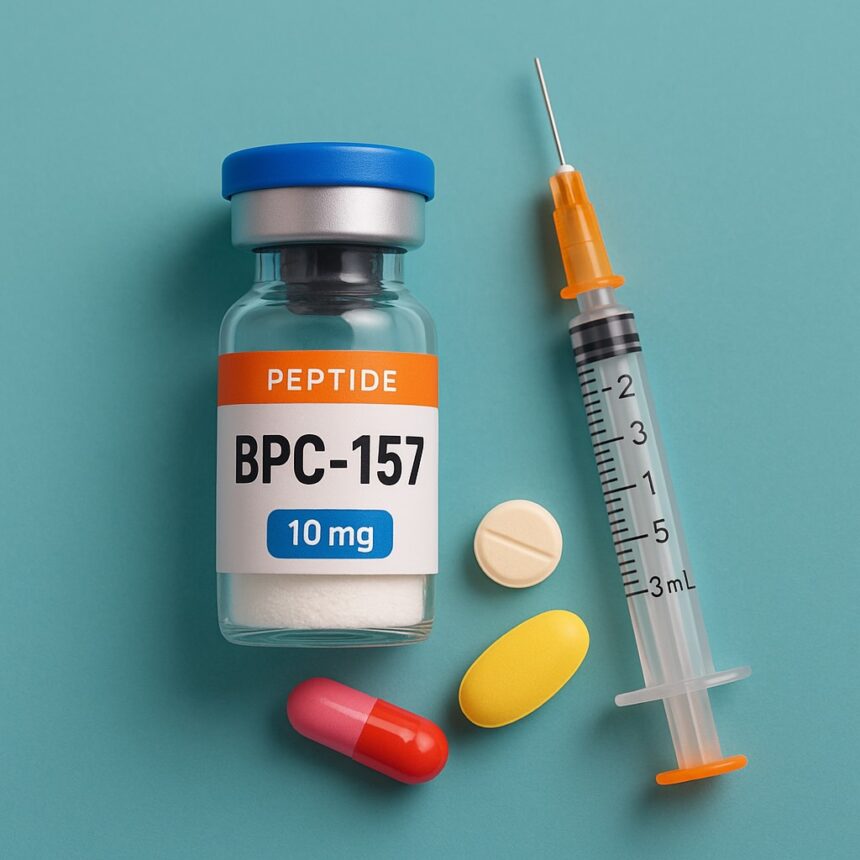
Research into peptides for healing, recovery, and tissue repair has expanded rapidly in recent years. Scientists are studying a range of bioactive peptides for their potential effects on inflammation, cellular signaling, vascular responses, tissue remodeling, and wound-healing pathways.
- Peptides Being Studied for Healing and Recovery
- BPC-157: A Major Focus of Tissue Repair Research
- TB-500 and Thymosin Beta-4 Research
- GHK-Cu: Research Into Tissue Remodeling
- KPV: Inflammation and Barrier Repair Research
- BPC-157 vs TB-500 vs GHK-Cu vs KPV
- What Makes a Peptide Interesting for Recovery Research?
- How Researchers Compare Healing Peptides
- Why Research-Grade Peptides Matter
- The Future of Peptide Research for Tissue Repair
- Research Peptides and the Next Stage of Recovery Science
- Final Thoughts
Among the compounds receiving significant research attention are BPC-157, TB-500, GHK-Cu, and KPV. Each has a different biological profile, which makes direct comparisons more useful than treating all recovery peptides as interchangeable.
However, an important distinction remains: much of the evidence surrounding these compounds comes from cellular and animal research, rather than large, controlled human clinical trials.
So, which peptides are attracting the most interest in healing and recovery research?
Peptides Being Studied for Healing and Recovery
The term “healing peptide” covers a broad group of compounds. Some are investigated for tissue remodeling, while others are studied for inflammatory signaling or cellular repair.
Four peptides frequently discussed in this research area include:
- BPC-157: Investigated extensively in preclinical models of tissue injury and repair.
- TB-500: Associated with research into thymosin beta-4 and wound-healing processes.
- GHK-Cu: Studied for tissue remodeling, extracellular matrix activity, and skin biology.
- KPV: Investigated primarily for anti-inflammatory and epithelial barrier-related effects.
Rather than asking which peptide is universally “best,” researchers generally need to consider which biological pathway or tissue response is being investigated.
BPC-157: A Major Focus of Tissue Repair Research
BPC-157 is one of the most widely discussed experimental peptides in the field of tissue repair.
Preclinical research has investigated BPC-157 across several models involving gastrointestinal tissue, muscle, connective tissue, and vascular responses. Proposed mechanisms include effects involving nitric oxide signaling, angiogenesis, endothelial function, and cellular repair pathways.
Recent research reviews continue to highlight BPC-157’s potential while also emphasizing the major gap between laboratory findings and established human evidence.
A 2026 review specifically noted that BPC-157 still lacks an approved pharmaceutical formulation, validated dosing regimen, and completed Phase II clinical trial. The authors identified pharmacokinetic and translational limitations as important barriers to clinical development.
That makes BPC-157 particularly interesting for preclinical research into tissue repair, but it also demonstrates why promising laboratory findings should not automatically be interpreted as established clinical outcomes.
TB-500 and Thymosin Beta-4 Research
TB-500 is commonly discussed in connection with thymosin beta-4, a naturally occurring peptide that has been investigated for its role in tissue repair and wound-healing biology.
Research into thymosin beta-4 has examined processes associated with wound closure, cell migration, angiogenesis, and tissue regeneration. Reviews of the literature have identified thymosin beta-4 as an important subject in experimental wound-healing research.
This makes TB-500 particularly relevant when researchers are examining the broader relationship between peptide signaling and tissue recovery.
However, TB-500 should not simply be treated as interchangeable with naturally occurring thymosin beta-4. Researchers need to distinguish between the specific compound being investigated, its formulation, experimental model, and available evidence.
GHK-Cu: Research Into Tissue Remodeling
GHK-Cu represents another interesting direction in peptide research.
GHK is a naturally occurring tripeptide that can bind copper, forming the GHK-Cu complex. Research has explored its relationship with tissue remodeling, extracellular matrix biology, inflammation, and skin-related processes.
Unlike peptides that are primarily investigated in models of systemic inflammation or musculoskeletal injury, GHK-Cu has attracted particular attention in research involving skin biology and tissue remodeling.
This distinction matters when comparing peptides for healing and repair. Tissue regeneration is not one single biological process. Researchers may be interested in collagen-related activity, cellular migration, extracellular matrix remodeling, angiogenesis, inflammatory signaling, or epithelial repair.
GHK-Cu is therefore an interesting candidate for research focused on the relationship between peptide signaling and tissue remodeling.
KPV: Inflammation and Barrier Repair Research
KPV is a short tripeptide consisting of lysine, proline, and valine. It is derived from the C-terminal region of alpha-melanocyte-stimulating hormone and has been investigated for its anti-inflammatory properties.
Research has examined KPV in intestinal epithelial cells, immune cells, and animal models of intestinal inflammation. One study found that KPV influenced NF-κB and MAP kinase signaling while reducing inflammatory cytokine activity.
Other research has investigated KPV in relation to epithelial barrier function and tissue repair. Studies involving inflammatory models have reported changes in inflammatory signaling and epithelial recovery.
More recent research has also examined KPV in skin cells exposed to particulate matter. Researchers observed effects involving oxidative stress, inflammatory signaling, and cell viability in cellular and three-dimensional skin models.
These findings make KPV especially interesting for researchers investigating the connection between inflammation, epithelial integrity, and tissue repair.
BPC-157 vs TB-500 vs GHK-Cu vs KPV
A simple comparison helps demonstrate why these peptides attract interest for different research applications.
| Peptide | Main Research Interest | Evidence Landscape |
| BPC-157 | Tissue injury, vascular signaling, connective tissue and repair pathways | Primarily preclinical |
| TB-500 / Thymosin Beta-4 | Wound healing, cell migration, angiogenesis and tissue repair | Preclinical and translational research |
| GHK-Cu | Tissue remodeling, skin biology and extracellular matrix processes | Laboratory and translational research |
| KPV | Inflammation, epithelial signaling and barrier-related research | Cellular and animal research |
This table should not be interpreted as a clinical ranking. Each peptide has been investigated through different models and endpoints, making direct “winner” comparisons scientifically difficult.
For research purposes, the better question is often which peptide best matches the biological pathway under investigation?
What Makes a Peptide Interesting for Recovery Research?
Several biological characteristics can make a peptide worth investigating.
Inflammation
Inflammation is an important part of tissue repair, but prolonged or excessive inflammatory signaling can interfere with normal recovery processes.
KPV, for example, has been studied extensively for effects on inflammatory pathways including NF-κB signaling.
Cellular Migration
Cell movement is another important component of tissue repair. During wound healing, different cell populations need to migrate toward damaged areas.
Research into thymosin beta-4 has examined cellular migration and related processes involved in wound repair.
Angiogenesis and Vascular Signaling
New blood-vessel formation can be important in tissue regeneration because repairing tissue requires adequate oxygen and nutrient delivery.
BPC-157 research has investigated pathways involving VEGFR2 and nitric oxide signaling in preclinical models.
Extracellular Matrix Remodeling
The extracellular matrix provides structural support for tissues and changes significantly during repair.
GHK-Cu research has therefore attracted attention because of its relationship with tissue remodeling and skin biology.
How Researchers Compare Healing Peptides
There is no single laboratory test that determines which peptide is “best” for healing.
Researchers may instead evaluate several endpoints depending on the study design. These can include:
- Cell migration
- Collagen-related activity
- Inflammatory cytokine expression
- Oxidative stress
- Angiogenesis
- Epithelial barrier integrity
- Fibroblast activity
- Wound closure
- Tissue morphology
- Molecular signaling pathways
This is why results from one experimental model cannot automatically be transferred to another.
A peptide that demonstrates an interesting effect in a cell culture model may behave differently in an animal model. Likewise, positive findings in animals do not establish safety or effectiveness in humans.
Why Research-Grade Peptides Matter
The quality of experimental materials is an important consideration when conducting peptide research.
Researchers need reliable information about identity, purity, analytical characterization, storage conditions, and batch consistency. These factors can influence reproducibility and make it easier to interpret experimental results.
Pharmagrade Peptides is one example of a research-focused peptide supplier operating within this broader research market.
For laboratories investigating peptide biology, documentation and analytical data can be just as important as the compound itself. A well-characterized research material provides a stronger foundation for reproducible laboratory work.
The Future of Peptide Research for Tissue Repair
The field is moving toward a more detailed understanding of how peptides interact with cellular signaling networks.
Instead of simply categorizing compounds as “healing peptides,” researchers are increasingly examining specific mechanisms. These include inflammatory regulation, angiogenesis, extracellular matrix remodeling, epithelial integrity, oxidative stress, and cell migration.
That shift could help researchers identify which peptide pathways are most relevant to specific tissue-repair questions.
At the same time, more high-quality human research is needed. BPC-157 provides a useful example of this challenge: decades of preclinical interest have not yet translated into the clinical evidence required for an established therapeutic application.
The same principle applies to other experimental peptides. Promising laboratory results are a starting point for further research, not a substitute for controlled clinical evidence.
Research Peptides and the Next Stage of Recovery Science
The growing interest in peptides for healing, recovery, and repair reflects a broader trend in molecular and regenerative research.
BPC-157, TB-500, GHK-Cu, and KPV each offer different research directions. BPC-157 is frequently examined in tissue injury and vascular signaling models. Thymosin beta-4 research has explored wound healing and cellular migration. GHK-Cu has a strong connection with tissue remodeling research, while KPV has attracted attention for inflammatory and epithelial pathways.
Peptides Source provides another research-focused source for laboratories and researchers exploring the growing peptide research landscape.
Ultimately, the most useful peptide is not necessarily the one with the biggest reputation online. It is the compound whose biological characteristics, research history, and experimental profile best match the scientific question being investigated.
Final Thoughts
The current research landscape does not support a simple ranking of the “best” healing peptides.
Instead, BPC-157, TB-500, GHK-Cu, and KPV represent different areas of investigation within tissue repair and recovery research. Their mechanisms, experimental models, and evidence levels vary considerably.
For that reason, researchers should evaluate peer-reviewed evidence, experimental design, analytical characterization, and translational limitations before drawing conclusions.
As research continues, better-designed studies may clarify which peptide pathways have genuine potential for tissue repair and which findings remain limited to preclinical models.
Research disclaimer: The peptides discussed above are presented for scientific and research discussion only. Experimental or preclinical findings should not be interpreted as evidence of established human safety, efficacy, or medical treatment. These compounds should not be used as a substitute for professional medical care.