
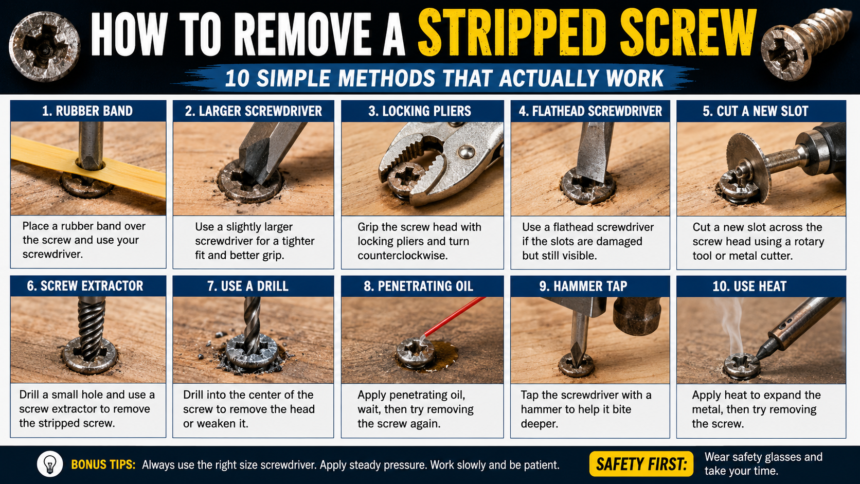
A stripped screw can quickly turn a simple repair into a frustrating challenge. Whether you’re working on furniture, electronics, appliances, or home improvement projects, knowing how to remove a stripped screw can save time, money, and unnecessary damage.
- What Is a Stripped Screw?
- Why Screws Get Stripped
- Inspect the Screw First
- Method 1: Use a Rubber Band
- Method 2: Try a Larger Screwdriver
- Method 3: Use Locking Pliers
- Method 4: Use a Flathead Screwdriver
- Method 5: Cut a New Slot
- Method 6: Use a Screw Extractor Kit
- Method 7: Use a Drill
- Method 8: Apply Penetrating Oil
- Method 9: Use a Hammer for Extra Grip
- Method 10: Use Heat
- How to Remove a Stripped Screw from Wood
- How to Remove a Stripped Screw from Electronics
- Common Mistakes to Avoid
- Tools That Help Remove Stripped Screws
- How to Prevent Stripped Screws in the Future
- When to Call a Professional
- Final Thoughts
The good news is that most stripped screws can be removed using common household tools. With the right technique, even a stubborn screw can often come out without damaging the surrounding material.
In this guide, you’ll learn exactly how to remove a stripped screw using proven methods that work in real-world situations.
What Is a Stripped Screw?
A stripped screw is a screw whose head has become damaged, making it difficult or impossible for a screwdriver to grip properly.
This usually happens when the wrong screwdriver size is used, too much force is applied, or the screw has become worn over time.
Think of it like a key that no longer fits its lock. The tool can’t get enough grip to turn the screw, which is why removal becomes difficult.
Why Screws Get Stripped
Before learning how to remove a stripped screw, it helps to understand why it happens.
Common causes include:
- Using the wrong screwdriver size
- Applying too much pressure
- Over-tightening the screw
- Rust or corrosion
- Low-quality screws
- Frequent removal and reinstallation
As the saying goes, “The right tool makes every job easier.” Using proper tools from the beginning can prevent many stripped screws.
Inspect the Screw First
Before trying any removal method, carefully examine the screw.
Look for:
- How badly the head is stripped
- Whether the screw is rusted
- The type of screw head
- How accessible the screw is
Sometimes a slightly damaged screw can be removed with a simple trick, while heavily stripped screws may require more advanced methods.
Method 1: Use a Rubber Band
One of the easiest techniques for how to remove a stripped screw involves a simple rubber band.
Place a wide rubber band over the screw head and press your screwdriver firmly into it.
The rubber fills the damaged gaps and creates additional grip between the screwdriver and screw.
Steps:
- Lay the rubber band over the screw.
- Insert the screwdriver.
- Press down firmly.
- Turn slowly counterclockwise.
This method works surprisingly well for mildly stripped screws.
Method 2: Try a Larger Screwdriver
Sometimes the screwdriver simply isn’t making enough contact.
Switching to a slightly larger screwdriver can create a tighter fit and improve grip.
Apply firm downward pressure while turning slowly.
Many people are surprised that such a simple adjustment can solve the problem immediately.
Method 3: Use Locking Pliers
If part of the screw head is exposed, locking pliers can be extremely effective.
Grip the outer edge of the screw head tightly and slowly rotate it counterclockwise.
This method bypasses the damaged slots entirely and uses direct gripping force.
It’s one of the most reliable approaches for how to remove a stripped screw when enough of the head is visible.
Method 4: Use a Flathead Screwdriver
If the original screw head is a Phillips design, you may be able to use a flathead screwdriver instead.
Find a flathead that fits snugly into the damaged grooves.
Push down firmly and turn slowly.
In many cases, the wider blade can catch portions of the screw head that a Phillips screwdriver cannot.
Method 5: Cut a New Slot
When the screw head is severely damaged, creating a new slot can help.
Using a rotary tool or metal cutting tool, carefully cut a straight groove across the top of the screw.
After creating the slot:
- Insert a flathead screwdriver
- Apply pressure
- Turn slowly
This effectively transforms the damaged screw into a slotted screw.
Method 6: Use a Screw Extractor Kit
A screw extractor is specifically designed for removing damaged screws.
If you’re regularly working on repairs, this is one of the best investments you can make.
How It Works
- Drill a small pilot hole into the screw.
- Insert the extractor.
- Turn counterclockwise.
- The extractor bites into the metal and removes the screw.
Professional mechanics and contractors often rely on extractor kits because they’re highly effective.
When learning how to remove a stripped screw, this is considered one of the most dependable methods.
Method 7: Use a Drill
If the screw refuses to budge, drilling may be necessary.
Carefully drill into the center of the screw head.
In many cases, drilling removes enough of the head that the attached material can be lifted away, exposing the screw shaft for removal with pliers.
This method requires patience and precision to avoid damaging nearby surfaces.
Method 8: Apply Penetrating Oil
Rust and corrosion often make screw removal much harder.
Applying penetrating oil can loosen the bond between the screw and material.
Popular penetrating oils work by creeping into tiny spaces around the threads.
Process:
- Apply oil to the screw.
- Wait 15–30 minutes.
- Attempt removal using another method.
This combination often succeeds where force alone fails.
Method 9: Use a Hammer for Extra Grip
A light tap with a hammer can sometimes improve grip.
Place the screwdriver into the screw head and gently tap it.
This can:
- Seat the screwdriver deeper
- Break minor corrosion
- Improve contact between tool and screw
Be careful not to strike too hard, especially on delicate materials.
Method 10: Use Heat
Heat can expand metal and loosen stubborn screws.
A soldering iron applied directly to the screw head is often safer than an open flame.
After heating:
- Allow slight cooling
- Attempt removal immediately
This technique is especially useful for screws locked in place by thread-locking compounds.
How to Remove a Stripped Screw from Wood
Wood projects present unique challenges.
When removing a stripped screw from wood:
- Avoid excessive force
- Protect the wood surface
- Use pliers when possible
- Apply penetrating oil if necessary
If the screw head breaks off, you may need to remove the remaining shaft using specialized extraction tools.
Patience is key. Rushing often causes more damage than the original problem.
How to Remove a Stripped Screw from Electronics
Electronics require extra care.
Devices such as laptops, gaming consoles, and smartphones often use very small screws.
For delicate electronics:
- Use precision screwdrivers
- Try the rubber band method first
- Avoid excessive drilling
- Work in a well-lit area
A damaged screw is frustrating, but damaging the device itself can be much worse.
Common Mistakes to Avoid
Many people make the problem worse while trying to remove a stripped screw.
Avoid these mistakes:
- Using the wrong screwdriver size
- Applying excessive force
- Drilling too aggressively
- Ignoring rust buildup
- Rushing the process
- Using worn-out tools
Remember the old workshop rule: “Slow is smooth, and smooth is fast.”
Careful work often solves the problem faster than brute force.
Tools That Help Remove Stripped Screws
Having the right tools nearby makes a huge difference.
Useful tools include:
- Screw extractor kits
- Locking pliers
- Rubber bands
- Rotary tools
- Precision screwdrivers
- Penetrating oil
- Power drill
- Soldering iron
These tools can turn a frustrating repair into a manageable task.
How to Prevent Stripped Screws in the Future
The best solution is prevention.
Simple Prevention Tips
- Always use the correct screwdriver size.
- Apply steady pressure.
- Avoid over-tightening.
- Replace worn screws.
- Keep tools in good condition.
- Use quality hardware whenever possible.
A few extra seconds of care can prevent hours of frustration later.
When to Call a Professional
Sometimes a screw is simply too damaged or too critical to risk removing yourself.
Consider professional help when:
- Working on expensive electronics
- Handling automotive components
- Dealing with structural hardware
- Facing severe corrosion
- Risking damage to valuable equipment
Professionals often have specialized extraction tools that aren’t commonly available to homeowners.
Final Thoughts
Learning how to remove a stripped screw is an essential DIY skill that can save both time and money. Whether you use a rubber band, locking pliers, a screw extractor, or a drill, the key is choosing the right method for the situation.
Most stripped screws can be removed successfully with patience and the proper technique. Start with the simplest solutions first and work toward more advanced methods only when necessary.
The next time you encounter a damaged screw, you’ll know exactly how to remove a stripped screw without turning a small problem into a major repair.
Also Read: Media Watcher