
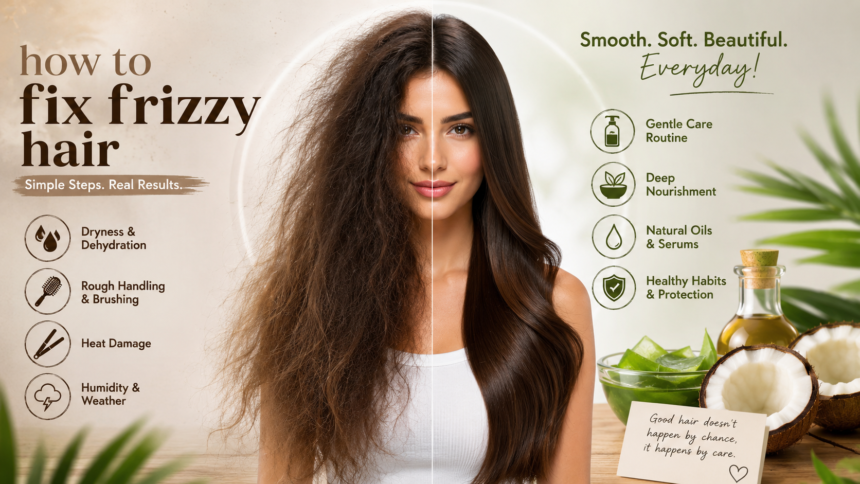
Frizzy hair is one of the most common hair concerns, and it can be frustrating when your hair looks dry, rough, or unmanageable even after styling. The truth is, learning how to fix frizzy hair is not about one quick trick — it’s about understanding your hair, changing habits, and following a consistent care routine.
- Main reasons behind frizz:
- Use gentle, sulfate-free shampoo
- Don’t wash too often
- Conditioner is non-negotiable
- Stop rubbing with a towel
- Air drying vs blow drying
- Leave-in conditioner
- Anti-frizz serum
- Natural oils
- Weekly hair masks
- Why deep conditioning works
- Always use heat protectant
- Lower temperature settings
- Limit daily styling
- Silk or satin pillowcases
- Loose hairstyles
- Light oiling before bed
- Humid weather
- Dry weather
- Mistakes include:
- Keratin treatment
- Deep salon conditioning
- Hair botox or smoothing treatments
Many people struggle with frizz daily, especially in humid weather or after heat styling. But the good news is that frizz is completely manageable when you follow the right steps. This detailed guide will walk you through everything you need to know about how to fix frizzy hair in a practical, real-life way.
Understanding Frizzy Hair: What’s Really Happening?
Before fixing frizz, you need to understand it properly. Frizz is not a hair “type” — it is a condition.
When you are trying to learn how to fix frizzy hair, you must first understand that frizz happens when the hair cuticle (outer layer) is raised instead of lying flat. This allows moisture from the environment to enter the hair shaft unevenly, causing puffiness and rough texture.
Think of your hair like a roof. When the tiles are smooth and aligned, everything looks neat. But when they lift up or break, rain (moisture) gets inside and creates chaos. That’s exactly what happens with frizz.
Main reasons behind frizz:
- Lack of hydration in hair strands
- Damage from heat styling tools
- Overwashing with strong shampoos
- Humid or dry environmental conditions
- Chemical treatments like coloring or straightening
- Rough towel drying or brushing habits
As one hair expert often says, “Frizz is not your enemy — it’s your hair asking for care.”
Once you understand this, learning how to fix frizzy hair becomes much easier and more logical.
Step 1: Build the Right Washing Routine
One of the most important foundations of how to fix frizzy hair is how you wash your hair. Most people unknowingly damage their hair during washing.
Use gentle, sulfate-free shampoo
Harsh shampoos strip natural oils, leaving hair dry and weak. Instead, use a mild shampoo that cleans without removing moisture completely.
When washing:
- Focus shampoo on the scalp only
- Let the foam clean the lengths naturally
- Avoid scrubbing ends aggressively
This small change alone improves how to fix frizzy hair significantly over time.
Don’t wash too often
Washing hair every day can make frizz worse. Natural oils are essential for smoothness.
Ideal routine:
- Oily hair: every 2–3 days
- Normal hair: 2 times a week
- Dry hair: 1–2 times a week
Conditioner is non-negotiable
Conditioner is one of the most powerful tools in how to fix frizzy hair.
Apply it from mid-length to ends and leave it for a few minutes. It smooths the cuticle and locks in hydration.
Without conditioner, hair becomes like dry grass — rough and uncontrollable.
Step 2: Fix Your Drying Technique
Drying hair incorrectly is one of the biggest hidden causes of frizz. If you are serious about how to fix frizzy hair, this step matters a lot.
Stop rubbing with a towel
Traditional towel rubbing creates friction, which lifts the cuticle and leads to frizz.
Instead:
- Gently squeeze excess water
- Wrap hair in a microfiber towel or cotton T-shirt
- Pat dry instead of rubbing
This reduces breakage and keeps hair smoother.
Air drying vs blow drying
Air drying is always healthier, but not always practical.
If you use a blow dryer:
- Use medium or cool setting
- Keep distance from scalp
- Use a nozzle to control airflow
- Never use high heat daily
Heat damage is one of the biggest enemies of how to fix frizzy hair, so control is key.
Step 3: Choose the Right Products for Frizz Control
Products play a major role in how to fix frizzy hair, but using the wrong ones can make things worse.
Leave-in conditioner
This acts like a protective layer for your hair throughout the day.
Benefits:
- Reduces dryness
- Improves softness
- Prevents humidity damage
Anti-frizz serum
Serum is like a quick fix for frizz. It smooths hair instantly and adds shine.
Use a small amount only — too much can make hair greasy.
Natural oils
Oils are one of the oldest and most effective solutions for how to fix frizzy hair.
Best options:
- Argan oil for shine
- Coconut oil for deep repair
- Jojoba oil for lightweight hydration
A few drops can completely change your hair texture over time.
Step 4: Deep Conditioning and Hair Masks
If your hair is extremely frizzy, regular conditioning is not enough. Deep treatments are essential in how to fix frizzy hair.
Weekly hair masks
Hair masks restore moisture and repair damage from within.
You can use:
- Store-bought deep conditioning masks
- DIY masks like honey + yogurt
- Aloe vera + coconut oil blends
Apply once a week for best results.
Why deep conditioning works
It penetrates deeper into the hair shaft compared to normal conditioner.
As professionals often say, “Healthy hair is built from inside, not just polished from outside.”
This is a key principle in how to fix frizzy hair long-term.
Step 5: Heat Styling Control
Heat tools are useful but dangerous if overused. If you want to master how to fix frizzy hair, you must control heat exposure.
Always use heat protectant
Before using any straightener or curler, apply a heat protectant spray. It creates a barrier between hair and heat.
Lower temperature settings
High heat burns moisture from your hair.
Recommended:
- Fine hair: low heat
- Thick hair: medium heat
Limit daily styling
Daily straightening or curling leads to long-term frizz and breakage.
Give your hair “rest days” to recover naturally.
Step 6: Night Routine for Frizz-Free Hair
Night care is often ignored but extremely powerful in how to fix frizzy hair.
Silk or satin pillowcases
Cotton causes friction, which leads to tangles and dryness.
Silk reduces friction and keeps hair smooth overnight.
Loose hairstyles
Avoid tight ponytails. Instead:
- Loose braid
- Soft bun
- Natural open hair (if not tangled)
Light oiling before bed
A small amount of oil helps lock moisture overnight and reduces morning frizz.
This simple habit can transform your results in how to fix frizzy hair.
Step 7: Weather and Environmental Care
Your environment affects frizz more than you think. Humidity and dryness both impact how to fix frizzy hair.
Humid weather
- Use anti-humidity sprays
- Avoid heavy creams
- Keep hair light and airy
Dry weather
- Use richer oils
- Increase hydration masks
- Avoid over-washing
Your routine must adjust with seasons to properly manage how to fix frizzy hair
Step 8: Common Mistakes to Avoid
Many people unintentionally make frizz worse while trying to fix it.
Mistakes include:
- Brushing dry hair aggressively
- Skipping conditioner
- Using too many styling products
- Over-washing hair
- Using high heat daily
Avoiding these mistakes is just as important as following treatments in how to fix frizzy hair.
Step 9: Professional Treatments (When Needed)
If home care is not enough, salon treatments can help support your journey in how to fix frizzy hair.
Keratin treatment
Smooths hair and reduces frizz for weeks.
Deep salon conditioning
Restores moisture at a professional level.
Hair botox or smoothing treatments
Improves texture and shine without permanent changes.
These treatments are useful for severe frizz cases.
Final Thoughts
Learning how to fix frizzy hair is not about perfection — it’s about consistency and care. Your hair responds to how you treat it every single day.
If you focus on hydration, gentle handling, and proper protection, you will slowly see a big difference in texture, shine, and manageability.
Frizz doesn’t disappear overnight, but with the right routine, it becomes easy to control and even reduce significantly.
Also Read: Media Watcher