
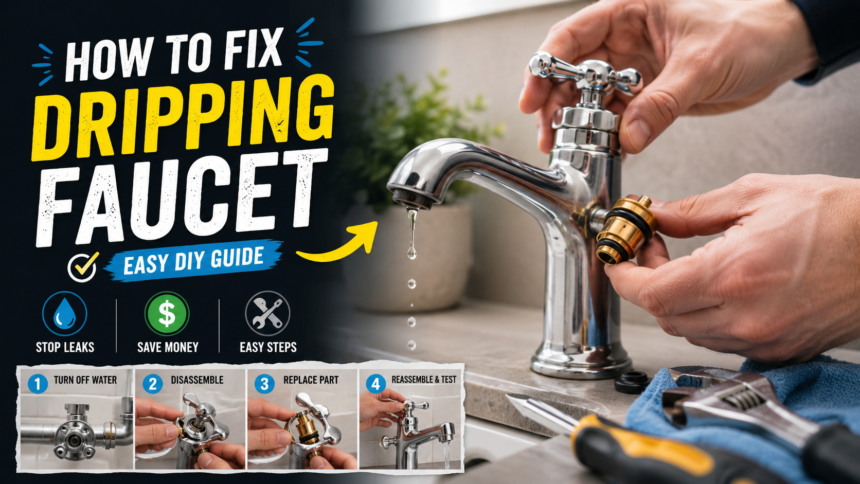
A dripping faucet is one of the most common household plumbing problems. At first, it may seem like a minor inconvenience, but those constant drops can add up quickly. A single leaking faucet can waste hundreds or even thousands of gallons of water each year, increasing your utility bills and putting unnecessary strain on your plumbing system.
- Why You Should Fix a Dripping Faucet Immediately
- Understanding How Faucets Work
- Common Causes of a Dripping Faucet
- Tools Needed to Fix a Dripping Faucet
- Step 1: Turn Off the Water Supply
- Step 2: Identify Your Faucet Type
- How to Fix Dripping Faucet with a Worn Washer
- How to Replace a Damaged O-Ring
- How to Fix Dripping Faucet by Replacing the Cartridge
- Remove the Handle
- Remove the Retaining Clip
- Pull Out the Cartridge
- Install the New Cartridge
- Reassemble and Test
- Cleaning Mineral Deposits
- Repairing a Ball Faucet
- Repairing a Ceramic Disk Faucet
- Inspecting the Valve Seat
- Check for High Water Pressure
- Reassemble the Faucet Properly
- Common Mistakes to Avoid
- When to Replace the Entire Faucet
- Preventing Future Faucet Leaks
- Signs You Need Professional Help
- Final Thoughts
The good news is that learning how to fix dripping faucet problems is usually much easier than most people think. In many cases, you don’t need expensive tools or professional plumbing experience. With a little patience and the right guidance, you can identify the cause of the leak and repair it yourself.
Whether your faucet is dripping from the spout, leaking around the handle, or causing water to pool around the base, this guide will explain everything you need to know about how to fix dripping faucet issues effectively and safely.
Why You Should Fix a Dripping Faucet Immediately
Many homeowners ignore a small leak because it seems harmless. However, even a slow drip can cause bigger problems over time.
A faucet that drips once every second can waste thousands of gallons of water each year. This not only increases your water bill but also contributes to unnecessary water waste.
Ignoring the issue may also allow internal faucet components to wear out further. What starts as a simple washer replacement could eventually become a complete faucet replacement if left untreated.
As plumbing professionals often say, “Small leaks create big expenses.” Addressing the problem early can save significant time and money
Understanding How Faucets Work
Before learning how to fix dripping faucet problems, it helps to understand the basic function of a faucet.
Every faucet contains internal components that control water flow and create a watertight seal when the handle is turned off. Over time, these components wear down due to constant use, water pressure, and mineral buildup.
When one of these parts fails, water can bypass the seal and continue dripping even when the faucet is closed.
Understanding this simple concept makes diagnosing faucet problems much easier.
Common Causes of a Dripping Faucet
Several issues can cause a faucet to leak.
Worn-Out Washer
Washers are rubber or silicone components that create a seal when the faucet is closed.
After years of use, washers can flatten, crack, or wear away completely.
Damaged O-Ring
An O-ring is a small rubber ring designed to prevent water from escaping around moving parts.
If it becomes brittle or damaged, leaks often develop near the handle.
Faulty Cartridge
Many modern faucets use cartridges to regulate water flow.
When the cartridge wears out, dripping often becomes unavoidable.
Corroded Valve Seat
The valve seat connects the faucet and spout.
Mineral deposits and corrosion can damage this area and cause leaks.
High Water Pressure
In some homes, excessive water pressure forces water through seals and creates dripping even when the faucet appears to be shut off.
Loose Components
Years of daily use can gradually loosen screws, nuts, and internal parts, creating small openings where water can escape.
Tools Needed to Fix a Dripping Faucet
Before beginning any repair, gather the necessary tools.
You may need:
- Adjustable wrench
- Phillips screwdriver
- Flat-head screwdriver
- Allen wrench
- Replacement washers
- Replacement O-rings
- Faucet cartridge
- Plumber’s grease
- Clean cloth
- Bucket
- White vinegar
- Small brush
Having all tools available beforehand makes the repair process much smoother.
Step 1: Turn Off the Water Supply
The first step in how to fix dripping faucet repairs is shutting off the water supply.
Look beneath the sink for the hot and cold water shut-off valves. Turn both valves clockwise until they stop.
If local shut-off valves are unavailable, turn off the home’s main water supply.
Once the water is off, open the faucet completely to drain any remaining water inside the pipes.
Place a towel or bucket underneath the sink to catch any residual water during the repair.
Skipping this step can result in water spraying unexpectedly when the faucet is disassembled.
Step 2: Identify Your Faucet Type
Different faucet designs require different repair methods.
Compression Faucet
Compression faucets have separate hot and cold handles.
They rely on washers to stop water flow and are among the most common faucet types that develop leaks.
Cartridge Faucet
Cartridge faucets contain a movable cartridge that controls water flow.
A worn cartridge is often the source of dripping.
Ball Faucet
Frequently found in kitchens, ball faucets use a rotating ball mechanism and multiple seals.
Ceramic Disk Faucet
These faucets use ceramic disks rather than washers.
While durable, they can still leak if debris damages the seals.
Proper identification helps determine the correct repair approach.
How to Fix Dripping Faucet with a Worn Washer
A worn washer is one of the most common causes of faucet leaks.
To replace it:
- Remove the faucet handle.
- Unscrew the packing nut.
- Remove the faucet stem.
- Locate the washer at the bottom.
- Remove the old washer.
- Install an identical replacement.
- Reassemble the faucet.
Even a washer that appears only slightly worn can cause persistent dripping.
Many homeowners are surprised when a repair costing only a few dollars completely solves the problem.
How to Replace a Damaged O-Ring
O-rings prevent water from leaking around moving parts.
Over time, these rubber rings can dry out, crack, or flatten.
To replace an O-ring:
- Remove the faucet handle.
- Locate the old O-ring.
- Carefully remove it.
- Install a matching replacement.
- Apply plumber’s grease before reassembly.
This simple repair often eliminates leaks around the faucet handle.
How to Fix Dripping Faucet by Replacing the Cartridge
If your faucet uses a cartridge, replacing it may solve the leak.
Remove the Handle
Most handles are secured by a visible screw or a hidden screw beneath a decorative cap.
Remove the Retaining Clip
Some cartridge faucets contain a retaining clip that must be removed before the cartridge can be extracted.
Pull Out the Cartridge
Use pliers if necessary, but avoid excessive force.
Install the New Cartridge
Insert the replacement cartridge exactly as the old one was positioned.
Reassemble and Test
Turn the water back on and check for leaks.
Replacing a faulty cartridge is often one of the most effective ways to repair modern faucets.
Cleaning Mineral Deposits
Hard water creates mineral deposits that accumulate inside faucets over time.
These deposits can interfere with seals and prevent components from closing properly.
To remove buildup:
- Disassemble the affected parts.
- Soak them in white vinegar.
- Leave them for several hours.
- Scrub gently using a soft brush.
- Rinse thoroughly.
Many faucet problems disappear after a thorough cleaning.
As one plumber famously noted, “Sometimes the solution isn’t replacement—it’s simply cleaning what already works.”
Repairing a Ball Faucet
Ball faucets contain several moving parts.
These include:
- Springs
- Rubber seats
- Ball assembly
- O-rings
A repair kit usually contains all necessary replacement parts.
To repair:
- Remove the handle.
- Remove the cap assembly.
- Lift out the ball.
- Replace worn springs and seals.
- Reassemble carefully.
Although ball faucets contain more parts than other faucet types, repairs are generally straightforward.
Repairing a Ceramic Disk Faucet
Ceramic disk faucets are durable but can still develop leaks.
Common causes include:
- Debris trapped between disks
- Damaged seals
- Mineral buildup
To repair:
- Turn off the water.
- Remove the handle.
- Access the ceramic disk assembly.
- Clean thoroughly.
- Replace damaged seals if necessary.
In many cases, cleaning alone restores proper function
Inspecting the Valve Seat
The valve seat forms the connection between the faucet body and spout.
Over time, mineral deposits and corrosion can damage this component.
Signs of valve seat problems include:
- Persistent dripping
- Corrosion inside the faucet
- Rough metal surfaces
If damaged, the valve seat may need resurfacing or replacement.
This repair requires specialized tools but can significantly extend faucet life.
Check for High Water Pressure
Not all dripping faucets are caused by worn parts.
Sometimes excessive household water pressure creates leaks.
Signs include:
- Dripping only at night
- Strong water flow
- No visible damage inside the faucet
A water pressure gauge can help determine whether pressure is too high.
Installing a pressure regulator may solve the issue permanently.
Reassemble the Faucet Properly
Once repairs are complete:
- Tighten all components securely.
- Avoid overtightening.
- Restore water supply gradually.
- Test both hot and cold settings.
- Inspect carefully for leaks.
Taking a few extra minutes during reassembly can prevent future problems.
Common Mistakes to Avoid
When learning how to fix dripping faucet problems, avoid these errors.
Using Incorrect Parts
Replacement components must match the original size exactly.
Overtightening Screws
Excessive force can crack components and create new leaks.
Skipping Cleaning
Installing new parts without removing mineral buildup often leads to repeated problems.
Forgetting Photos
Take pictures during disassembly.
This makes reassembly much easier later.
Ignoring Water Pressure
Many homeowners replace multiple parts only to discover that high water pressure was the actual problem.
When to Replace the Entire Faucet
Sometimes replacement makes more sense than repair.
Consider installing a new faucet if:
- The faucet is more than 15 years old.
- Corrosion is extensive.
- Multiple repairs have failed.
- Replacement parts are unavailable.
- Water efficiency is poor.
Modern faucets often use less water and provide better long-term reliability.
Preventing Future Faucet Leaks
Once you’ve learned how to fix dripping faucet issues, proper maintenance can help prevent future problems.
Clean Regularly
Remove mineral deposits before they become severe.
Check Water Pressure
Maintain pressure within recommended limits.
Replace Parts Early
Don’t wait until components completely fail.
Avoid Excessive Force
Closing handles too tightly accelerates wear.
Inspect Periodically
A quick monthly inspection can identify small problems before they become major repair.
Signs You Need Professional Help
While many faucet repairs are simple, some situations require a plumber.
Consider professional assistance if:
- The leak continues after repairs.
- Water pressure problems persist.
- Corrosion is severe.
- Pipes beneath the sink are leaking.
- You discover hidden water damage.
Knowing when to call an expert can prevent expensive mistakes.
Final Thoughts
Learning how to fix dripping faucet problems is one of the most valuable DIY home maintenance skills. Most leaks are caused by worn washers, damaged O-rings, faulty cartridges, mineral buildup, or loose internal components. Fortunately, these issues can often be repaired using basic tools and affordable replacement parts.
A dripping faucet may seem minor, but every drop contributes to wasted water and higher utility costs. By understanding how to fix dripping faucet issues properly and performing regular maintenance, you can extend the life of your plumbing fixtures, conserve water, and avoid unnecessary repair expenses.
The next time you hear that familiar drip, drip, drip, you’ll know exactly what to do.
Also Read: Media Watcher