
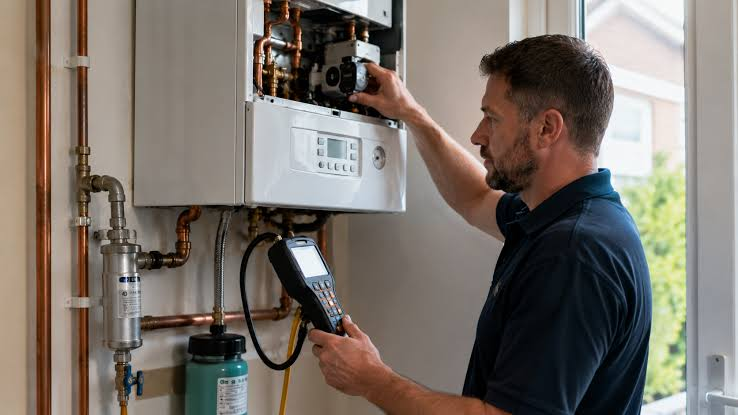
Ageing pipework causes recurring low pressure faults because copper and steel corrode internally over years of use, eventually opening tiny pinhole leaks at joints, bends, and old solder connections. These leaks are often too small to see but large enough to slowly drain system pressure, which is why topping up the boiler only fixes the fault for a few days at a time rather than for good.
- What Does the E119 Code Mean?
- Why Old Pipework Is Often the Real Cause
- 1. Corrosion and Pinhole Leaks
- 2. Worn Joints and Compression Fittings
- 3. Sludge Build Up in Old Systems
- How to Tell If a Pipework Leak Is Causing Low Boiler Pressure
- Common signs of a pipework leak include:
- How to Narrow Down the Problem
- Pipework Age and Risk of Recurring Faults
- Preventing Pressure Faults in an Ageing System
- Frequently Asked Questions
- 1. Can old pipework really cause a boiler to keep losing pressure?
- 2. How do I know if a pipe leak is causing my E119 fault?
- 3. Is it safe to keep topping up the pressure on an old system?
- 4. How old does pipework need to be before it becomes a risk?
- 5. Can a magnetic filter stop pipework from corroding?
- 6. Does bleeding radiators damage old pipework?
- 7. Should I replace all the pipework if I keep getting E119 faults?
- 8. Can a pressure sensor fault mimic a pipework leak?
- 9. How often should an ageing heating system be serviced?
- 10. What is the difference between a slow pipe leak and a sudden burst?
- Final Word
A homeowner topping up the pressure gauge every few weeks is usually treating a symptom rather than the cause, and old pipework hiding behind walls or under floors is one of the most common reasons an e119 boiler error won’t stay fixed. Copper and steel pipework corrodes from the inside out over years of use, and once a pinhole opens up in a joint or a length of pipe, water escapes slowly enough that you rarely see it but fast enough to keep dragging system pressure back down. This guide looks at why age catches up with pipework, how to tell if that is what’s behind your recurring fault, and what to actually do about it.
What Does the E119 Code Mean?
E119 is the standard low water pressure fault used across Baxi and several related boiler brands. It appears when system pressure falls below roughly 0.5 bar, at which point the boiler’s internal sensor locks the appliance out rather than let it run with too little water circulating through it. Repressurising through the filling loop clears the code in most cases, but the fault returning within days points to water leaving the system somewhere rather than a one off dip.
Why Old Pipework Is Often the Real Cause
Pipework does not fail all at once. Corrosion, wear, and small movements in the building work away at joints and pipe walls for years before a leak becomes noticeable, and by the time you’re getting a boiler pressure fault every week or two, that slow damage has usually reached the point of letting water through.
1. Corrosion and Pinhole Leaks
Copper pipe corrodes from the inside when the system water chemistry is off, often due to a mix of metals in the system or oxygen getting into the water through an undersized or poorly maintained expansion vessel. Over fifteen to twenty years, this slowly thins the pipe wall until a tiny pinhole opens, usually at a bend or a soldered joint where the metal is already under more stress.
2. Worn Joints and Compression Fittings
Older homes often still have original compression joints or soldered fittings that were perfectly sound when installed but have since dried out, shifted slightly, or corroded around the seal. These rarely fail dramatically. Instead they weep slowly, enough to drop pressure over a week or two without ever producing a visible puddle.
3. Sludge Build Up in Old Systems
Years of corrosion inside a heating system produce black iron oxide sludge, which settles in radiators and narrow sections of pipe. This does not directly cause pressure loss, but it does accelerate corrosion in the areas where it collects, making pinhole leaks more likely in exactly the parts of an old system that are already weakest.
How to Tell If a Pipework Leak Is Causing Low Boiler Pressure
If your boiler pressure keeps dropping even after you’ve topped it up, the problem may lie within your heating pipework rather than the boiler itself. Hidden leaks can develop in pipes beneath floors, behind walls, or in less accessible areas of your home, making them difficult to spot without a thorough inspection.
Common signs of a pipework leak include:
● Rust-coloured stains on walls, skirting boards, or floorboards near heating pipes.
● A persistent damp or musty smell with no obvious source, particularly around boxed-in pipework or chimney breasts.
● Boiler pressure that falls gradually over several days instead of dropping suddenly.
● Pressure loss that continues even after the pressure relief valve and expansion vessel have been inspected and confirmed to be working correctly.
If you notice one or more of these warning signs, it’s worth having your heating system checked before the leak causes more extensive damage or repeated boiler faults.
How to Narrow Down the Problem
1. Note how quickly pressure drops after topping up. Hours suggest a bigger leak somewhere obvious, days suggest a small pipe leak.
2. Check visible pipework under the boiler, in the loft, and under floors where accessible, looking for staining or damp insulation.
3. Ask an engineer to pressure test the system in sections if nothing is visible, which isolates which run of pipe is losing water.
4. Have the expansion vessel and pressure relief valve checked at the same time, since a failing vessel can mimic the same symptoms as a pipe leak.
Pipework Age and Risk of Recurring Faults
As a rough guide, the older the pipework, the more likely ageing joints and corrosion are behind a repeat fault rather than a single faulty part.
| Pipework Age | Typical Risk | What to Watch For |
| Under 10 years | Low | Occasional pressure drift, usually from bleeding radiators |
| 10 to 20 years | Moderate | Slow pinhole leaks at joints, early corrosion staining |
| 20 to 30 years | High | Recurring pressure faults, visible rust marks, damp patches |
| 30 years plus | Very High | Frequent leaks, multiple weak points, sludge buildup |
Preventing Pressure Faults in an Ageing System
Fitting a magnetic filter reduces the sludge circulating through old pipework and radiators, which slows the corrosion process. An annual service gives an engineer the chance to spot early staining or weeping joints before they turn into a proper leak. Keeping a rough note of your normal pressure reading also makes it much easier to notice a slow drop early, rather than only realising once the boiler has already locked out.
Frequently Asked Questions
1. Can old pipework really cause a boiler to keep losing pressure?
Yes. Corroded or worn pipework is one of the most common reasons a boiler keeps losing pressure, since even a pinhole leak too small to see can drain enough water over a week to trigger a low pressure fault again.
2. How do I know if a pipe leak is causing my E119 fault?
Look for rust staining, damp patches, or a musty smell near pipe runs, and note whether pressure drops gradually over several days rather than suddenly. A gradual drop with no visible leak often points to old pipework.
3. Is it safe to keep topping up the pressure on an old system?
Topping up once or twice is fine, but repeatedly topping up a system with a hidden leak can push water into areas of pipe or boiler components that are already weakened, turning a small leak into a bigger repair.
4. How old does pipework need to be before it becomes a risk?
Problems typically start becoming more common from around fifteen to twenty years, though this depends heavily on the original installation quality and the water chemistry inside the system.
5. Can a magnetic filter stop pipework from corroding?
A magnetic filter cannot reverse existing corrosion, but it does reduce the sludge circulating through the system, which slows down further internal corrosion in radiators and pipework.
6. Does bleeding radiators damage old pipework?
Bleeding itself does not damage pipework, but letting air back into the system regularly encourages internal corrosion over time, which is one of the underlying causes of pinhole leaks in older systems.
7. Should I replace all the pipework if I keep getting E119 faults?
Not necessarily. An engineer can usually pressure test and isolate the specific section that is leaking rather than needing to replace an entire system, unless multiple areas are already showing signs of failure.
8. Can a pressure sensor fault mimic a pipework leak?
Yes. A worn pressure sensor can report a false low reading even when the system is actually holding pressure normally, which is why an engineer checks the sensor alongside the pipework before diagnosing a leak.
9. How often should an ageing heating system be serviced?
Once a year is standard, and it becomes more important on older systems since a service is often when an engineer first spots early staining or a weeping joint before it becomes a full leak.
10. What is the difference between a slow pipe leak and a sudden burst?
A slow leak drains pressure gradually over days or weeks with little to no visible sign at first, while a sudden burst causes a rapid pressure drop along with an obvious puddle or damp patch appearing quickly.
Final Word
A recurring pressure fault on an older heating system is rarely bad luck. It is usually years of gradual corrosion finally catching up with a joint or a length of pipe that has been quietly weakening in the background. Getting the actual leak point identified, rather than just topping up the pressure every few weeks, is what actually stops the fault coming back and protects the rest of the system from further damage.
If your boiler keeps locking out and you suspect the pipework rather than the boiler itself, the engineers at 0800 Homefix can pressure test the system, trace the leak, and sort out a proper repair instead of another temporary top up.