
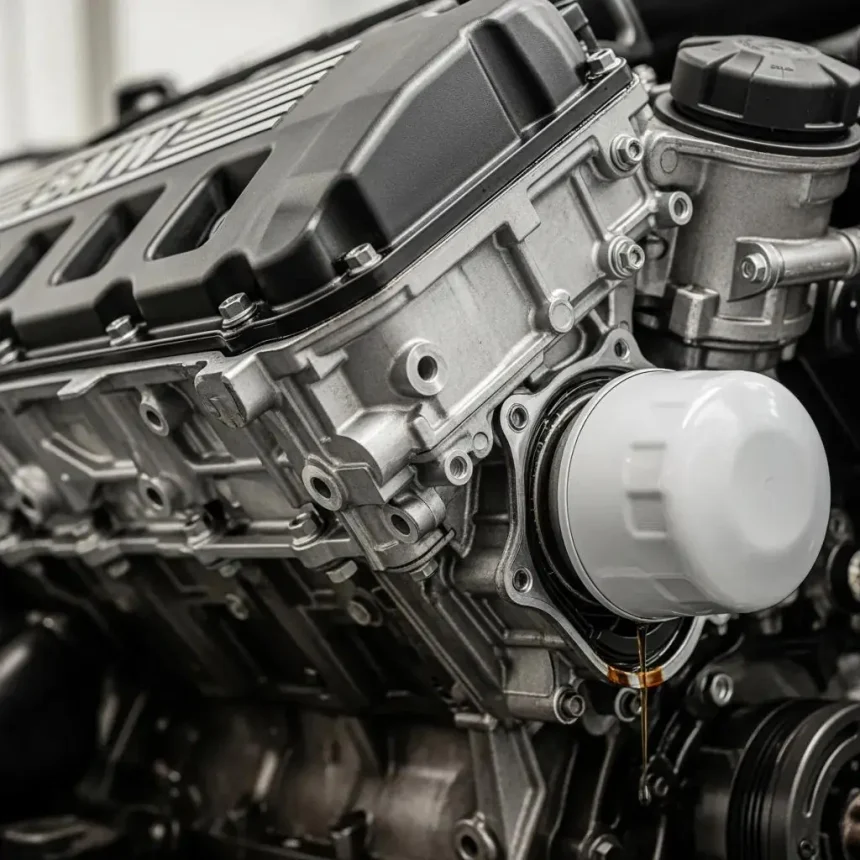
A burning-oil smell after a drive is easy to dismiss when there is no warning light and no obvious oil puddle. The engine may sound normal, the oil level may barely move, and the smell may disappear once the car is parked. Yet that hot, oily odour is often one of the earliest signs that engine oil is escaping onto a surface where it should never be.
- The smell is often stronger than the visible leak
- Valve-cover leaks are a common place to investigate
- Oil-filter housing and cooler seals can create a different risk
- A recent oil change can leave a temporary smell
- Crankcase ventilation problems can contribute to oil leakage
- Oil around turbocharged engines needs careful inspection
- Why delaying the inspection can make the job larger
- What to tell the mechanic before the inspection
- When Rodent Damage May Be Part of the Problem
- Frequently Asked Questions
On a BMW, the source can be as simple as oil spilled during servicing, but repeated smells deserve attention. Oil leaks frequently begin as slow seepage. They may reach a hot exhaust shield, turbocharger area or engine casing and burn off before enough liquid reaches the ground to create a visible stain.
The location of the smell, when it appears and whether smoke is present can all help narrow down the problem. The aim is to identify the leak while it is still a small sealing issue rather than after it contaminates belts, damages rubber components or allows the engine oil level to fall significantly.
The smell is often stronger than the visible leak
Engine oil does not need to pour onto an exhaust component to create a strong smell. A thin film reaching a very hot surface can produce an odour that travels through the engine bay and ventilation system.
That is why the driveway can remain clean. Oil may collect on the side of the engine, sit in a recess, soak into accumulated dirt or burn away gradually. Undertrays can also hide the route it takes.
If the smell is strongest after a longer drive or when the car stops at traffic lights, heat is an important clue. Airflow while moving can carry vapour away. Once the car slows, the smell becomes more noticeable around the bonnet or through the cabin intake.
Valve-cover leaks are a common place to investigate
The valve cover seals the top of the cylinder head and contains engine oil around the valvetrain. Depending on the BMW engine, the cover itself may be plastic, and the sealing arrangement can include a perimeter gasket and seals around other openings.
Heat cycling can harden gaskets and age plastic components. A small leak may run down the side of the engine towards hot exhaust components. The result can be a sharp burning-oil smell and, in some cases, a light wisp of smoke from the engine bay after driving.
A technician should confirm the actual source before replacing parts. Oil travels. A leak from higher on the engine can make a lower component look responsible, especially once dirt and airflow spread the residue.
Oil-filter housing and cooler seals can create a different risk
Another area that deserves careful inspection on some BMW engines is the oil-filter housing and related oil-cooler sealing surfaces. When seals begin to leak, oil may spread across the front or side of the engine rather than dripping neatly to the ground.
This type of leak matters for more than smell. On engines where leaking oil can reach drive belts or nearby rubber components, contamination can shorten component life and create further problems. The exact layout varies significantly across BMW generations, so internet advice based on a different engine code should not be treated as a diagnosis for your car.
The useful approach is to clean and inspect the area, identify the highest fresh point of leakage and confirm the repair before the oil has time to spread again.
A recent oil change can leave a temporary smell
Not every burning smell means a gasket has failed. During an oil service, a small amount of oil can be spilled around the filler neck, filter housing or protective covers. If it reaches a warm surface, the residue may smell for a short period.
The difference is persistence. A minor spill should diminish as the residue is cleaned or burns away safely. If the smell returns on every drive, fresh oil is likely reaching the hot area.
After any recent service, tell the workshop when the smell began. That timing helps distinguish an old leak from spilled oil, a disturbed seal or another issue that appeared at the same time.
Crankcase ventilation problems can contribute to oil leakage
The engine’s crankcase ventilation system controls pressure and routes blow-by gases back into the intake. If that system is not working correctly, abnormal crankcase pressure can encourage oil to escape past seals or create drivability symptoms.
BMW uses different ventilation designs across its engine families, and some components may be integrated into the valve cover. Symptoms can overlap with other faults, including oil consumption, whistling noises, rough idle or oil around seals.
Because the system affects pressure, simply replacing a leaking gasket without checking an underlying ventilation problem can leave the owner with another leak later. Diagnosis should focus on why the seal failed as well as where oil is visible.
Oil around turbocharged engines needs careful inspection
Many modern BMW engines are turbocharged. Turbocharger systems add oil feed and return lines as well as very high temperatures around the exhaust side of the engine. A leak in this region may create a strong smell even when the amount of oil lost is relatively small.
Blue smoke from the exhaust, smoke from under the bonnet and an external burning-oil smell are not interchangeable symptoms. They can point to different paths for oil. Turbocharger seal problems, for example, require a different diagnosis from oil dripping onto the outside of a hot exhaust component.
Avoid assuming that the turbocharger has failed simply because the vehicle is turbocharged. Inspection should establish whether the oil is inside the intake or exhaust path, on external lines, or coming from another component above the turbo area.
Why delaying the inspection can make the job larger
A slow leak can remain stable for a long time, but it can also spread into areas where oil causes secondary damage. Rubber hoses, electrical connectors and drive belts are not intended to stay saturated with engine oil. Oil reaching the exhaust also creates smoke and odour that can become more pronounced as the leak worsens.
More importantly, a leak that becomes severe can lower the engine oil level. BMW’s electronic oil-level monitoring can help alert the driver on many models, but it should not replace physical diagnosis of the source. If an oil pressure warning appears, treat it as more urgent than a routine low-level reminder and follow the vehicle’s instructions.
What to tell the mechanic before the inspection
Useful details include whether the smell comes through the vents or mainly from outside, whether it happens only after the engine is hot, whether you see smoke under the bonnet, whether the oil level has changed and whether the car was recently serviced. Also mention any repairs involving the valve cover, filter housing, turbo system or crankcase ventilation.
If you have noticed unusual activity around the vehicle while it is parked, that is also worth mentioning during an inspection. Rodents can chew through wiring, insulation and other materials in engine bays, potentially creating electrical faults or damage that may be mistaken for a mechanical problem. Checking for nesting material, damaged wiring or other signs can help rule out an unrelated source of trouble.
BMW Service Melbourne can help identify the source of a persistent burning-oil smell by inspecting the engine bay and checking whether the problem is coming from a gasket, oil-filter housing, turbo-related component or another part of the engine. A proper inspection is preferable to replacing parts based only on symptoms that may have several possible causes.
The key is timing. A burning smell is often the stage at which a leak is detectable but has not yet become dramatic. Investigating at that point gives the owner the best chance of repairing a seal or housing before oil spreads, the level drops or nearby components become involved.
When Rodent Damage May Be Part of the Problem
Not every unusual engine-bay smell or electrical symptom is caused by an oil leak. Rodents can enter parked vehicles and damage wiring, insulation and other materials, particularly when cars are left unused for extended periods. In some cases, this damage can occur alongside an existing mechanical issue, making the symptoms harder to identify.
If you have noticed signs of rodent activity around your garage, parking area or vehicle, addressing the source can help prevent further damage. Professional Rodent Control Sydney services may be appropriate when rodent activity is persistent and is affecting the area where the vehicle is stored.
The key is to distinguish between the different possible causes. A burning-oil smell that appears consistently after the engine reaches operating temperature is more likely to require mechanical inspection. At the same time, chewed wiring, nesting material or droppings may point towards a separate rodent-related issue.
Frequently Asked Questions
Why does my BMW smell like burning oil but have no visible leak?
A small oil leak may burn off when it reaches a hot exhaust component or another high-temperature surface. Oil can also collect in engine recesses, under covers or on the undertray, making the source difficult to see from underneath the vehicle.
Is a burning-oil smell from a BMW dangerous?
It can become a serious problem if the leak worsens or oil reaches hot exhaust components, drive belts or other sensitive parts. A significant loss of engine oil can also lead to engine damage. A persistent smell should therefore be investigated rather than ignored.
Can an oil change cause my BMW to smell like burning oil?
Yes. A small amount of oil can be spilled around the filler neck, filter housing or engine covers during servicing. If the residue reaches a hot surface, it can create a temporary burning smell. If the smell continues after several drives, however, it is worth checking for an active leak.
Can rodents cause problems in a BMW engine bay?
Yes. Rodents can chew wiring, insulation and other materials inside or around an engine bay. This can cause electrical faults and other damage that may occur alongside unrelated mechanical problems. Signs such as nesting material, droppings or damaged wiring should be investigated separately from an oil leak.