
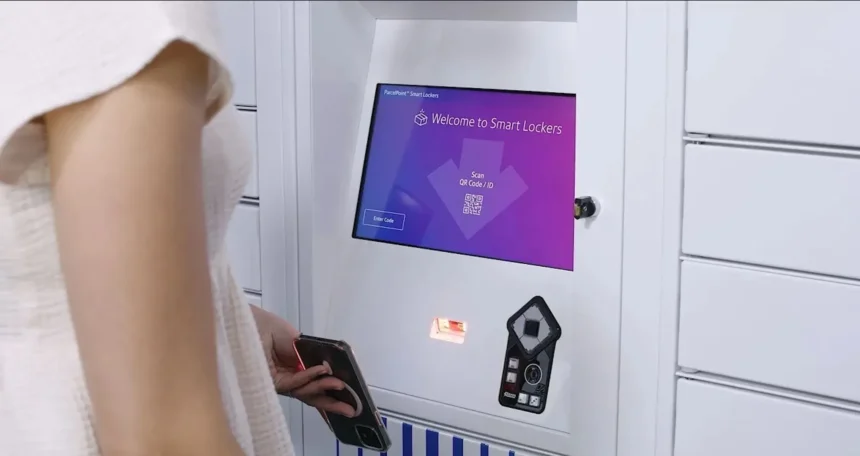
The demand for intelligent, connected storage systems is rapidly increasing across industries such as retail, logistics, healthcare, and workplace management. Traditional lockers are being replaced by smart locker solutions that support automation, remote access, and real-time monitoring, driven by the need for greater efficiency, security, and operational visibility. This shift is especially visible in urban delivery networks and corporate environments, where flexible storage and contactless interactions have become standard expectations.
AI and IoT are transforming lockers from simple storage units into data-driven systems capable of automating workflows and optimizing resource usage. By 2027, the global smart locker market is projected to exceed USD 3–4 billion, growing at double-digit CAGR as organizations invest in last-mile delivery automation and secure asset management. In this context, smart locker software plays a central role by enabling remote control, user authentication, predictive maintenance, and real-time analytics across distributed locker networks.
Key technologies reshaping smart locker solutions include IoT sensors for occupancy tracking, AI-powered analytics for usage prediction, cloud platforms for centralized management, and API-driven integrations with delivery, retail, and enterprise systems. Together, these innovations are turning smart lockers into scalable infrastructure that supports automation, improves user experience, and provides actionable operational insights.
How IoT Creates Connected and Smarter Locker Networks
The Internet of Things (IoT) is transforming smart locker systems into fully connected, intelligent networks that go far beyond simple storage units. By embedding sensors, connectivity modules, and cloud-based software into lockers, operators can manage entire networks remotely, ensuring real-time visibility into system status, usage patterns, and security events. This connectivity enables faster decision-making, reduced manual oversight, and more efficient locker operations across distributed locations such as retail stores, logistics hubs, and residential buildings.
Real-time device monitoring and remote management
IoT-enabled lockers continuously transmit operational data such as door status, usage activity, temperature conditions (if required), and system health. This allows administrators to monitor and control lockers remotely through centralized dashboards. They can unlock compartments, assign access permissions, or adjust configurations without physical presence, significantly improving operational flexibility and responsiveness.
Occupancy tracking and optimization of asset utilization
Connected lockers provide accurate insights into occupancy rates and usage trends. Operators can identify underutilized locations, optimize locker distribution, and dynamically allocate capacity based on demand. This data-driven approach helps maximize asset efficiency, reduces idle infrastructure, and improves customer experience by ensuring lockers are available where and when they are needed most.
Predictive maintenance powered by sensor data
IoT sensors continuously collect performance data from mechanical components such as locks, hinges, and electronic modules. By analyzing this information, systems can detect early signs of wear or malfunction and trigger predictive maintenance before failures occur. This reduces unexpected downtime, extends equipment lifespan, and lowers overall maintenance costs while maintaining consistent service availability.
Automated alerts for operational and security issues
Smart locker networks are designed to generate instant alerts in case of irregularities such as hardware malfunctions, power outages, connectivity disruptions, or unauthorized access attempts. These automated notifications allow operators to respond quickly, minimizing disruption and improving system reliability. In security-sensitive environments, real-time alerts also strengthen protection against theft or tampering.
By combining real-time monitoring, intelligent analytics, and automated response mechanisms, IoT enables smart locker systems to operate as adaptive, self-optimizing networks. This not only improves operational efficiency but also enhances security, scalability, and user trust across all deployment environments.
How AI Is Automating Smart Locker Operations
Artificial intelligence is making smart locker systems more autonomous, secure, and efficient by reducing manual intervention and enabling intelligent decision-making. Instead of relying only on static rules, AI-driven lockers can analyze user behavior, automate access processes, and continuously optimize operations based on real-world usage data. This shift is especially important in high-volume environments like logistics hubs, corporate offices, and residential complexes where speed, accuracy, and security are critical.
AI-powered authentication and intelligent access control
AI enhances security by enabling advanced authentication methods such as facial recognition, behavioral verification, and anomaly detection. These systems can verify users in real time, reducing reliance on physical keys, PIN codes, or access cards. In addition, AI can detect unusual access patterns—such as repeated failed attempts or access from unfamiliar devices—and trigger additional verification steps, improving protection against unauthorized entry.
Automated workflows for deliveries, returns, and internal logistics
Smart locker systems increasingly use AI to automate end-to-end operational workflows. In logistics and retail environments, AI can assign parcels to optimal locker compartments, notify users automatically, and manage returns without staff involvement. In corporate settings, lockers can streamline employee equipment distribution, IT asset handovers, and document exchange. These automated processes reduce manual workload, minimize errors, and accelerate service delivery.
Smart analytics for usage optimization and operational efficiency
AI-driven analytics provide deep insights into how lockers are used across time, location, and user groups. By analyzing patterns such as peak usage hours, frequently accessed compartments, or underutilized lockers, operators can optimize placement and configuration. This helps improve resource utilization, reduce congestion, and ensure that locker capacity aligns with actual demand.
AI-driven demand forecasting and dynamic allocation
Machine learning models can forecast locker demand based on historical data, seasonal trends, and external factors such as shopping peaks or delivery surges. This enables proactive allocation of locker space, ensuring availability during high-demand periods. In advanced systems, AI can even support dynamic redistribution of capacity across networks, improving scalability and user satisfaction.
Together, these AI capabilities transform smart lockers from simple automated storage systems into intelligent infrastructure that adapts in real time, enhances security, and continuously improves operational performance.
Building Future-Ready Smart Locker Solutions
As smart locker systems become more advanced, their effectiveness increasingly depends on the underlying software architecture. Integrating AI and IoT is not just about adding features—it requires a scalable, secure, and modular foundation that can support real-time data processing, continuous device connectivity, and evolving business requirements. Without this foundation, systems can quickly become fragmented, difficult to maintain, and unable to handle growing operational demands.
A future-ready smart locker ecosystem relies heavily on cloud connectivity, APIs, and third-party integrations. Cloud infrastructure enables centralized management of distributed locker networks, ensuring consistent performance and real-time visibility across locations. APIs make it possible to connect locker systems with logistics platforms, payment gateways, identity providers, and enterprise resource planning tools. This interoperability is essential for creating seamless workflows, from package assignment and user authentication to notifications and analytics. Strong integration capabilities also ensure that the system can evolve without requiring complete redesigns when new services or technologies are introduced.
In this space, COAX Software develops custom logistics software solutions that combine AI, IoT, and automation to meet specific business requirements. Their approach focuses on building flexible, scalable platforms that integrate smart locker hardware with intelligent software layers, enabling real-time monitoring, predictive operations, and automated workflows. By tailoring solutions to each client’s operational model, COAX Software helps organizations implement systems that are not only efficient today but also adaptable to future growth and technological change.
Smarter Lockers, Better Business Outcomes
AI and IoT are fundamentally reshaping how smart locker systems operate, turning them into intelligent, responsive infrastructure rather than static storage solutions. Across logistics, retail, residential, and enterprise environments, these technologies improve efficiency through automation, enhance reliability with predictive maintenance, strengthen security through advanced authentication and real-time monitoring, and elevate user experience with faster, more seamless access to services.
Investing in intelligent smart locker technology is no longer just an operational upgrade—it is a long-term scalability strategy. Organizations that adopt connected, data-driven locker systems can handle growing volumes of deliveries and users without proportional increases in operational complexity. At the same time, they gain the flexibility to integrate new technologies, adapt to changing demand patterns, and continuously improve performance. This positions smart locker networks as a key enabler of future-ready, efficient, and secure business operations.