
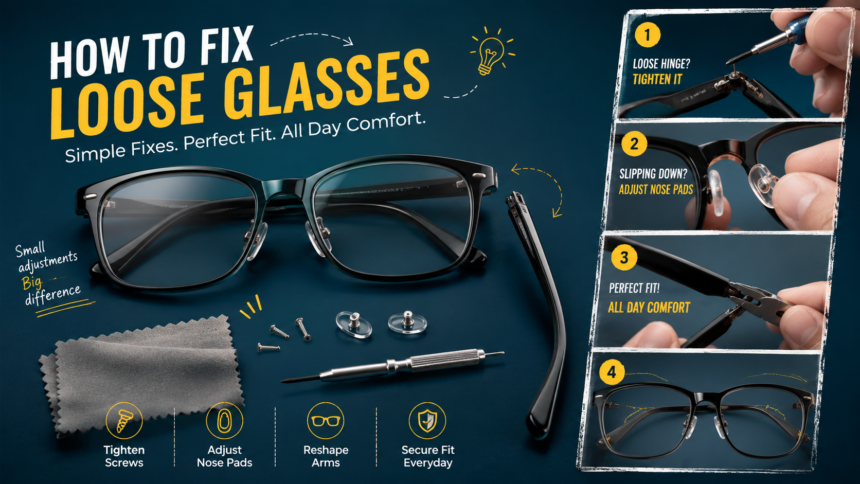
Have your glasses started slipping down your nose every few minutes? Do they feel unstable when you walk, bend over, or look down? If so, you’re not alone. Loose glasses are one of the most common problems eyewear users face. Fortunately, learning how to fix loose glasses is often simple and doesn’t always require a visit to an optician.
- Why Do Glasses Become Loose?
- Signs That Your Glasses Are Too Loose
- Tools You May Need
- How to Fix Loose Glasses with Loose Screws
- How to Fix Loose Plastic Glasses Frames
- How to Fix Loose Metal Glasses Frames
- How to Fix Loose Glasses by Adjusting Nose Pads
- How to Fix Loose Glasses Behind the Ears
- Temporary Fixes for Loose Glasses
- How to Fix Loose Glasses Without Tools
- Common Mistakes to Avoid
- Benefits of Properly Fitted Glasses
- How to Prevent Glasses from Becoming Loose Again
- DIY Repairs vs Professional Help
- Frequently Asked Questions
- Can loose glasses affect vision?
- How often should glasses be adjusted?
- Why do my glasses keep sliding down?
- Can I adjust plastic frames at home?
- Are loose glasses normal?
- Final Thoughts
Glasses are designed to fit securely while keeping your lenses properly aligned with your eyes. When they become loose, not only can they feel uncomfortable, but they can also affect your vision quality. Constantly pushing your glasses back into place can become frustrating throughout the day.
The good news is that most loose glasses can be fixed with a few simple adjustments. Whether the issue comes from loose screws, stretched temple arms, widened nose pads, or everyday wear and tear, there are practical solutions you can try at home.
In this detailed guide, you’ll learn exactly how to fix loose glasses, understand why they become loose, discover the best DIY fixes, and learn how to prevent the problem from happening again.
Why Do Glasses Become Loose?
Before you can properly fix your glasses, it helps to understand why they become loose in the first place.
Most eyeglasses are worn daily for several hours. Every time you put them on, take them off, clean them, or store them, small amounts of stress are placed on the frame. Over time, these small stresses add up.
Even high-quality glasses will gradually lose their perfect fit. The hinges can loosen, the frame can widen, and the nose pads can shift position.
As many eyewear professionals say, “Glasses are like shoes—the more you wear them, the more they adapt to your habits.”
Daily Wear and Tear
Daily use naturally affects the shape of your glasses.
Putting them on and taking them off repeatedly can slowly stretch the temple arms and loosen the hinges.
Loose Hinge Screws
Tiny screws hold the frame and temples together.
These screws can loosen over time due to constant movement, making the glasses feel unstable.
Heat Exposure
Heat is surprisingly harmful to eyeglasses.
Leaving glasses inside a hot car or near direct sunlight can soften certain materials and change the frame shape.
Improper Storage
Placing glasses face-down on tables or tossing them into bags without a case can gradually bend the frame.
Signs That Your Glasses Are Too Loose
Many people don’t realize their glasses need adjustment.
Here are some common signs:
- Glasses constantly slide down your nose.
- The frame feels unstable.
- One side sits lower than the other.
- Glasses fall off when bending forward.
- You frequently push them back into place.
- The temples feel loose around your ears.
If you experience any of these issues, it’s time to learn how to fix loose glasses properly.
Tools You May Need
Most adjustments require only a few simple tools.
Useful items include:
- Eyeglass repair kit
- Precision screwdriver
- Microfiber cloth
- Silicone nose pads
- Soft pliers
- Warm water
- Magnifying glass
Having these tools available makes repairs easier and safer.
How to Fix Loose Glasses with Loose Screws
Loose screws are one of the most common causes of loose glasses.
Inspect the Hinges
Start by examining both hinges carefully.
If the temples wobble or move excessively, the screws likely need tightening.
Tighten the Screws
Use a precision eyeglass screwdriver.
Turn the screw clockwise slowly until it feels secure.
Avoid forcing the screw because over-tightening can damage the hinge.
Check the Fit
Put the glasses on after tightening.
Many people find that tightening a single screw instantly solves the problem.
How to Fix Loose Plastic Glasses Frames
Plastic frames often loosen because the temple arms spread outward over time.
Use Warm Water
Fill a bowl with warm water.
Avoid boiling water because excessive heat can damage the frame.
Place the temple arms in the water for about 30 to 60 seconds.
Carefully Bend the Arms
Once softened slightly, gently bend the temple arms inward.
Only make very small adjustments.
A few millimeters can dramatically improve the fit.
Let Them Cool
Allow the glasses to cool naturally before testing them.
The frame should hold its new shape.
How to Fix Loose Metal Glasses Frames
Metal frames are generally easier to adjust than plastic frames.
Hold the Frame Securely
Use both hands to avoid putting pressure on the lenses.
Adjust the Temple Arms
Carefully bend the temple arms inward near the ear section.
Work slowly and check the fit frequently.
Test the Fit
Put the glasses on after every adjustment.
Small changes are often enough to create a secure fit.
How to Fix Loose Glasses by Adjusting Nose Pads
Sometimes the temples are perfectly fine, but the glasses still slide down your nose.
In this case, the nose pads may be the problem.
Examine the Nose Pads
Look closely at the pads.
If they seem too wide apart, they may not be gripping your nose properly.
Bring the Pads Closer Together
Use gentle pressure to move them slightly inward.
This creates a tighter fit on the bridge of your nose.
Test the Stability
Wear the glasses and move your head around.
You should notice improved grip almost immediately.
How to Fix Loose Glasses Behind the Ears
If your glasses feel loose around your ears, adjusting the temple tips can help.
Warm Plastic Tips
For plastic frames, warm the tips using warm water.
Bend Slightly Inward
Carefully curve the ends downward and inward.
This helps them hook more securely behind your ears.
Avoid Overdoing It
Too much bending can create discomfort.
Small changes work best.
Temporary Fixes for Loose Glasses
Need a quick solution?
These temporary fixes can help until you perform a permanent adjustment.
Silicone Ear Hooks
These attach to the temple arms and improve grip.
Stick-On Nose Pads
Extra nose pads can reduce slipping significantly.
Eyeglass Wax
Special wax products add grip to the bridge area.
Hair Tie Method
Small clear hair ties wrapped around temple ends can create extra stability.
These fixes are surprisingly effective for short-term use.
How to Fix Loose Glasses Without Tools
Sometimes you don’t have repair tools available.
Fortunately, there are still a few things you can try.
Manual Adjustments
Carefully bend the temple arms inward using your hands.
Work slowly and avoid applying excessive force.
Use Warm Water
Warm water can make plastic frames more flexible.
This allows safer adjustments without specialized tools.
Improve Grip
Cleaning oil and dirt from your nose pads can improve grip immediately.
Common Mistakes to Avoid
When learning how to fix loose glasses, it’s important to avoid common mistakes.
Using Boiling Water
Extreme heat can permanently damage frames and lens coatings.
Over-Tightening Screws
Too much force can strip the screw threads.
Bending Too Much
Large adjustments often create new problems.
Adjusting One Side Only
Always check both sides to keep the frame balanced.
Benefits of Properly Fitted Glasses
Properly fitted glasses offer more than comfort.
Better Vision Alignment
Lenses stay positioned exactly where they should.
Improved Comfort
You won’t experience constant slipping or pressure points.
Less Eye Strain
Correct lens alignment reduces visual fatigue.
Greater Confidence
You can focus on your activities instead of adjusting your glasses all day.
How to Prevent Glasses from Becoming Loose Again
Prevention is easier than repair.
Use Both Hands
Always remove glasses using both hands.
This prevents frame twisting.
Store Them Properly
Keep glasses in a protective case whenever possible.
Avoid Excessive Heat
Never leave glasses in hot cars or direct sunlight.
Schedule Adjustments
Professional adjustments every few months can keep glasses fitting perfectly.
As one optician puts it, “Five minutes of maintenance can save months of frustration.”
DIY Repairs vs Professional Help
Many adjustments can be done at home.
However, some situations require professional assistance.
Visit an optician if:
- The frame is cracked.
- Hinges are broken.
- Screws are missing.
- Glasses remain crooked.
- The frame feels unstable after adjustment.
Professionals have specialized tools that allow precise repairs without damaging the frame.
Frequently Asked Questions
Can loose glasses affect vision?
Yes. When lenses are not properly aligned with your eyes, vision quality can decrease.
How often should glasses be adjusted?
Most people benefit from adjustments every 3–6 months.
Why do my glasses keep sliding down?
Common causes include loose nose pads, widened frames, oily skin, or loose screws.
Can I adjust plastic frames at home?
Yes. Warm water and gentle adjustments are usually effective.
Are loose glasses normal?
Absolutely. Nearly all glasses become loose over time through regular use.
Final Thoughts
Learning how to fix loose glasses can save you money, improve comfort, and extend the life of your eyewear. Most loose glasses can be repaired by tightening screws, adjusting temple arms, repositioning nose pads, or correcting minor frame alignment issues.
The key is to make small adjustments, test the fit frequently, and avoid forcing the frame. With proper care and occasional maintenance, your glasses can remain secure, comfortable, and perfectly fitted for years. A few minutes spent making the right adjustment today can eliminate weeks of frustration and help you enjoy clear, comfortable vision every day.
Also Read: Media Watcher