
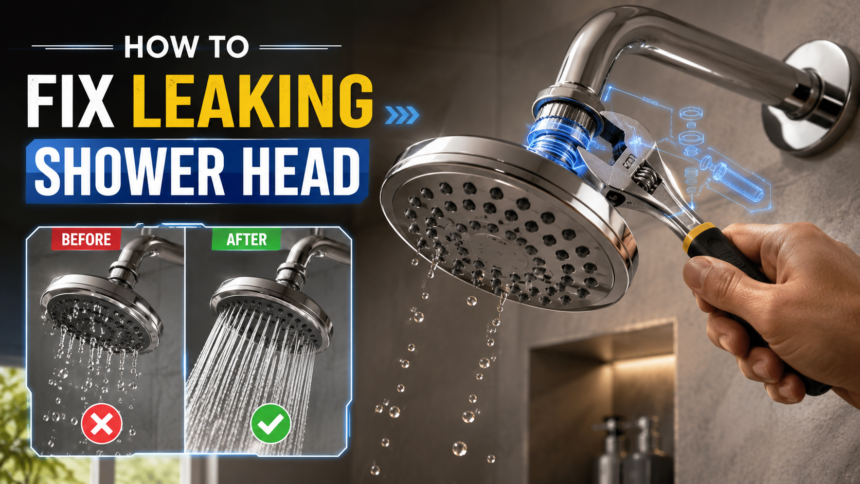
A leaking shower head can be surprisingly frustrating. The constant dripping sound can keep you awake at night, waste water throughout the day, and slowly increase your utility bill without you even noticing. What starts as a few drops every minute can eventually turn into a larger plumbing issue if left untreated.
- Higher Water Bills
- Increased Wear on Plumbing
- Mineral Buildup
- Mold and Moisture Issues
- Annoying Noise
- Basic Tools
- Repair Materials
- The Shower Head Nozzles
- The Connection Point
- Behind the Wall
- How to Tighten It
- How to Replace It
- Signs of a Bad O-Ring
- How to Apply It Correctly
- Vinegar Cleaning Method
- Symptoms of a Bad Cartridge
- 1. Turn Off Water Supply
- 2. Remove the Handle
- 3. Remove Decorative Trim
- 4. Remove Old Cartridge
- 5. Install New Cartridge
- 6. Reassemble Everything
- Overtightening Components
- Using the Wrong Washer Size
- Ignoring Mineral Deposits
- Reusing Old Tape
- Skipping Inspection
- Clean Every Few Months
- Check Connections Regularly
- Replace Washers Promptly
- Monitor Water Pressure
- Use Quality Replacement Parts
- Why does my shower head drip after I turn it off?
- Can hard water cause shower head leaks?
- Is plumber’s tape necessary?
- How long does it take to fix a leaking shower head?
- Can I fix a leaking shower head without a plumber?
- How much water can a leaking shower head waste?
The good news is that most homeowners can learn how to fix leaking shower head problems without calling a plumber. In many cases, the solution is as simple as replacing a washer, cleaning mineral deposits, or tightening a loose connection. Even if the leak seems serious, understanding the cause is the first step toward finding the right fix.
This detailed guide covers everything you need to know about how to fix leaking shower head, including common causes, step-by-step repair methods, maintenance tips, and ways to prevent future leaks.
What Causes a Shower Head to Leak?
Before you start repairing anything, it helps to understand why your shower head is leaking in the first place.
A shower head is designed to completely stop water flow when the faucet is turned off. If water continues dripping, it means something within the system is no longer creating a proper seal.
The most common causes include:
- Worn-out rubber washers
- Damaged O-rings
- Loose shower head connections
- Old plumber’s tape
- Mineral buildup from hard water
- Faulty shower cartridge
- Damaged faucet valve
- Cracked shower head components
Think of your shower system like a chain. When one small part fails, the entire system can start leaking.
As many plumbing professionals say, “The leak you ignore today is often the repair bill you pay tomorrow.”
Why You Should Fix a Leaking Shower Head Quickly
Many homeowners delay repairs because the leak seems minor.
However, even a small drip can waste a significant amount of water over time.
Potential consequences include:
Higher Water Bills
A dripping shower head can waste hundreds or even thousands of gallons of water annually.
Increased Wear on Plumbing
Constant water movement places additional stress on valves and seals.
Mineral Buildup
Leaking water encourages mineral deposits that can worsen the problem.
Mold and Moisture Issues
Persistent dripping can create excess humidity in bathrooms.
Annoying Noise
The repetitive sound of dripping water can become surprisingly irritating, especially at night.
Fixing the problem early saves money and prevents larger repairs later.
Signs That Your Shower Head Needs Repair
Sometimes a leak is obvious. Other times, the warning signs are more subtle.
Watch for:
- Water dripping after the shower is turned off
- Reduced water pressure
- Uneven spray patterns
- Water leaking around fittings
- Visible corrosion
- White mineral deposits
- Whistling or unusual noises
- Difficulty turning the shower handle
If you notice any of these symptoms, it’s time to investigate how to fix leaking shower head issues before they get worse.
Tools and Materials You’ll Need
One reason homeowners love learning how to fix leaking shower head problems is that the required tools are simple and affordable.
Gather the following:
Basic Tools
- Adjustable wrench
- Pliers
- Screwdriver
- Soft cloth
Repair Materials
- Plumber’s tape (Teflon tape)
- Replacement washer
- Replacement O-ring
- White vinegar
- Small cleaning brush
- Replacement cartridge (if necessary)
Having everything ready before you start makes the repair process much smoother.
Step 1: Determine Where the Leak Is Coming From
Not every shower leak originates from the same location.
Carefully inspect the shower while water is off.
Leaks generally come from:
The Shower Head Nozzles
Water drips directly from spray holes.
The Connection Point
Water leaks where the shower head attaches to the shower arm.
Behind the Wall
A more serious issue involving the valve or cartridge.
Identifying the exact source will help you choose the correct repair method.
Step 2: Tighten the Shower Head Connection
One of the simplest fixes is checking for a loose connection.
Over time, vibration and daily use can loosen threaded fittings.
How to Tighten It
- Wrap a cloth around the shower arm.
- Use an adjustable wrench carefully.
- Tighten the shower head slightly.
- Avoid excessive force.
After tightening, turn on the shower and check for leaks.
Many people searching for how to fix leaking shower head discover that a loose connection was the only problem.
Step 3: Remove the Shower Head for Inspection
If tightening doesn’t solve the issue, remove the shower head completely.
Turn it counterclockwise until it comes off.
Once removed, inspect:
- Thread condition
- Washer condition
- Mineral deposits
- Cracks
- Corrosion
Even a tiny crack can allow water to escape continuously.
Take your time during inspection because identifying the actual problem makes repairs much easier.
Step 4: Replace the Washer
A worn washer is one of the most common causes of shower head leaks.
The washer sits inside the connection point and creates a watertight seal.
Over time, rubber deteriorates because of:
- Heat
- Water pressure
- Mineral exposure
- Aging
How to Replace It
- Remove the old washer.
- Compare it with a new replacement.
- Install the new washer securely.
- Reattach the shower head.
This inexpensive repair often stops leaks immediately.
A washer may cost less than a cup of coffee but can save hundreds of gallons of water.
Step 5: Replace Damaged O-Rings
Many modern shower heads use O-rings to create internal seals.
These small rubber rings prevent water from escaping around moving parts.
Signs of a Bad O-Ring
- Cracking
- Flattening
- Dryness
- Splitting
When inspecting your shower head, check all visible O-rings carefully.
Replacing them is one of the most effective solutions for how to fix leaking shower head problems.
Step 6: Apply Fresh Plumber’s Tape
Thread seal tape is a critical part of any leak repair.
Old tape can dry out, tear, or lose effectiveness over time.
How to Apply It Correctly
- Remove all old tape.
- Clean the threads.
- Wrap new tape clockwise.
- Use 3–5 complete wraps.
- Reinstall the shower head.
Fresh tape helps create a secure, watertight connection.
Many recurring leaks disappear after this simple step.
Step 7: Clean Mineral Deposits
Hard water is one of the biggest enemies of shower heads.
Minerals like calcium and magnesium accumulate inside nozzles and fittings.
Over time, these deposits can:
- Restrict water flow
- Damage seals
- Cause uneven pressure
- Lead to leaks
Vinegar Cleaning Method
- Fill a bag with white vinegar.
- Place the shower head inside.
- Secure with a rubber band.
- Leave overnight.
- Scrub gently with a toothbrush.
- Rinse thoroughly.
This method removes stubborn buildup without damaging the fixture.
As many homeowners discover, a deep cleaning can restore both performance and efficiency.
Step 8: Inspect the Shower Cartridge
If water continues dripping after repairing the shower head itself, the problem may be deeper inside the plumbing system.
The shower cartridge controls water flow.
When it wears out, water can continue passing through even after the handle is turned off.
Symptoms of a Bad Cartridge
- Constant dripping
- Difficulty adjusting temperature
- Stiff handle movement
- Inconsistent water flow
Understanding how to fix leaking shower head often requires checking the cartridge because many leaks originate there.
How to Replace a Shower Cartridge
Although the process varies by manufacturer, the general steps include:
1. Turn Off Water Supply
Always shut off water before disassembly.
2. Remove the Handle
Unscrew and remove the shower handle.
3. Remove Decorative Trim
Take off the escutcheon plate.
4. Remove Old Cartridge
Pull out the damaged cartridge carefully.
5. Install New Cartridge
Insert the replacement according to manufacturer instructions.
6. Reassemble Everything
Reattach all components and test for leaks.
This repair takes longer but often solves persistent dripping issues.
When the Faucet Valve Is the Problem
Sometimes the issue isn’t the shower head or cartridge.
Older homes may have worn faucet valves.
Valve damage can occur because of:
- Corrosion
- Sediment buildup
- Years of use
- Poor maintenance
Replacing a faulty valve can permanently eliminate recurring leaks.
Common DIY Mistakes to Avoid
When learning how to fix leaking shower head, many homeowners accidentally create new problems.
Avoid these common mistakes.
Overtightening Components
Too much force can crack fittings.
Using the Wrong Washer Size
Even slight size differences can prevent proper sealing.
Ignoring Mineral Deposits
Cleaning is just as important as replacing parts.
Reusing Old Tape
Always apply fresh plumber’s tape.
Skipping Inspection
Inspect every component before reassembly.
A few extra minutes of careful inspection can save hours of future repairs.
Should You Repair or Replace the Shower Head?
Sometimes replacement makes more sense than repair.
Consider replacing the shower head if:
- It’s over 10 years old.
- Multiple parts are damaged.
- Water pressure remains poor.
- Corrosion is extensive.
- Cracks are visible.
Modern shower heads often provide better water efficiency and performance.
Sometimes spending a little more now prevents ongoing repair costs later.
Preventing Future Shower Head Leaks
Once you’ve successfully learned how to fix leaking shower head, keeping it leak-free becomes the next priority.
Clean Every Few Months
Use vinegar to remove mineral buildup.
Check Connections Regularly
Inspect fittings for looseness.
Replace Washers Promptly
Don’t wait for complete failure.
Monitor Water Pressure
Excessive pressure accelerates wear.
Use Quality Replacement Parts
Higher-quality components generally last longer.
Routine maintenance is always cheaper than emergency repairs.
Frequently Asked Questions
Why does my shower head drip after I turn it off?
The most common causes are worn washers, damaged O-rings, mineral buildup, or a faulty cartridge.
Can hard water cause shower head leaks?
Yes. Mineral deposits can interfere with seals and create pressure problems that lead to leaks.
Is plumber’s tape necessary?
Absolutely. Plumber’s tape helps seal threaded connections and prevents water from escaping.
How long does it take to fix a leaking shower head?
Most repairs take between 15 and 60 minutes depending on the cause.
Can I fix a leaking shower head without a plumber?
In most cases, yes. Basic tools and replacement parts are usually enough for common repairs.
How much water can a leaking shower head waste?
A single drip every second can waste thousands of gallons of water per year if left unrepaired.
Final Thoughts
Learning how to fix leaking shower head is a valuable DIY skill that can save money, reduce water waste, and prevent unnecessary plumbing problems. Whether the issue is a worn washer, damaged O-ring, loose connection, mineral buildup, or faulty cartridge, most leaks can be fixed with simple tools and a little patience.
The key is to identify the source of the leak, replace worn components, clean buildup, and test the system carefully. By addressing the problem early, you can restore proper performance and avoid more expensive repairs in the future.
Remember, every drip has a cause, and once you understand how to fix leaking shower head, you can stop that drip before it turns into a bigger problem.
Also Read: Media Watcher