
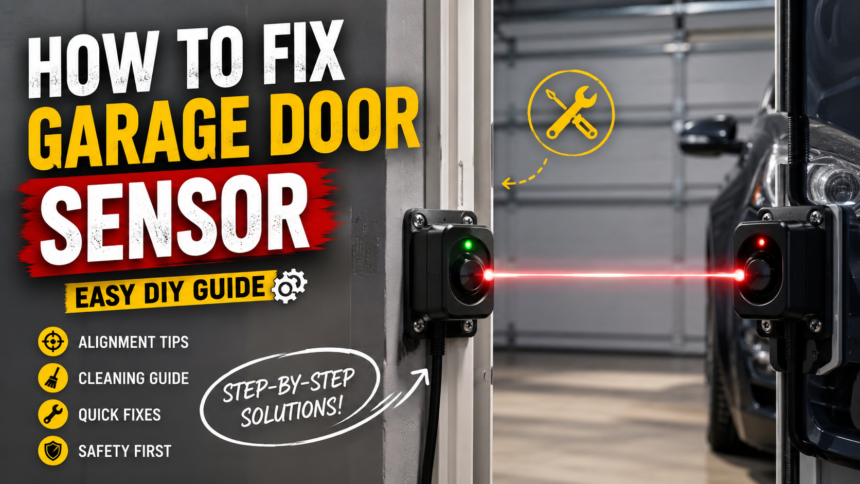
A garage door sensor is a small safety device, but when it stops working properly, it can prevent your garage door from closing or cause it to reverse unexpectedly. If you’ve ever pressed the remote and watched the door start to close only to open again, the sensor is often the culprit.
- What Does a Garage Door Sensor Do?
- Signs Your Garage Door Sensor Is Not Working
- Why Garage Door Sensors Stop Working
- Step 1: Clean the Sensor Lenses
- Step 2: Check Sensor Alignment
- Step 3: Realign the Sensors
- Step 4: Inspect the Wiring
- Step 5: Verify Power Supply
- Step 6: Remove Objects Blocking the Beam
- Step 7: Tighten Loose Sensor Brackets
- Step 8: Check for Sunlight Interference
- Step 9: Test the Door After Repairs
- When to Replace Garage Door Sensors
- Common Mistakes to Avoid
- Real-Life Example
- How Often Should Garage Door Sensors Be Checked?
- Final Thoughts
The good news is that learning how to fix garage door sensor problems is usually easier than most homeowners think. In many cases, you can solve the issue in less than 30 minutes without calling a professional.
This guide explains the most common sensor problems, how to identify them, and the exact steps to get your garage door working normally again.
What Does a Garage Door Sensor Do?
Garage door sensors are safety devices installed near the bottom of the garage door tracks. They work by sending an invisible beam between two sensor units.
When something blocks that beam, the garage door automatically stops or reverses direction. This prevents accidents involving children, pets, vehicles, or objects left in the door’s path.
As one garage technician often says, “A garage door sensor may be small, but it does one of the biggest safety jobs in your home.”
Signs Your Garage Door Sensor Is Not Working
Before learning how to fix garage door sensor issues, it’s important to recognize the warning signs.
Common symptoms include:
- Garage door won’t close completely
- Door starts closing and reverses
- Sensor lights are blinking
- One sensor light is off
- Door only closes when holding the wall button
- Random door reversal during operation
If you’re experiencing any of these problems, the sensors should be the first thing you inspect.
Why Garage Door Sensors Stop Working
Several issues can interfere with normal sensor operation.
The most common causes include:
- Dirty sensor lenses
- Misaligned sensors
- Loose mounting brackets
- Damaged wiring
- Power interruptions
- Sunlight interference
- Physical damage from impacts
Fortunately, most of these problems can be fixed without replacing the entire system.
Step 1: Clean the Sensor Lenses
The simplest solution when learning how to fix garage door sensor problems is cleaning the lenses.
Dust, spider webs, dirt, and moisture can block the infrared beam between sensors.
How to Clean Them
- Turn off the garage door opener.
- Locate both sensors near the floor.
- Use a clean microfiber cloth.
- Gently wipe each sensor lens.
- Remove dust, debris, and cobwebs.
Avoid using harsh chemicals because they may damage the plastic lens surface.
Many homeowners are surprised to discover that years of sensor problems disappear after a simple cleaning.
Step 2: Check Sensor Alignment
Misalignment is one of the most common reasons garage door sensors fail.
The sensors must face each other directly. Even a slight shift can interrupt the beam.
How to Check Alignment
Stand near the sensors and inspect them visually.
Look for:
- Crooked mounting brackets
- Tilted sensors
- One sensor pointing away from the other
Most sensors have LED indicator lights.
Typically:
- Solid green light = working properly
- Blinking light = alignment problem
- No light = power issue
If the lights are blinking, alignment is likely the proble
Step 3: Realign the Sensors
If the sensors are out of position, realigning them usually solves the issue.
Realignment Process
- Loosen the mounting screws slightly.
- Move the sensor slowly until the LED becomes solid.
- Hold the sensor in place.
- Tighten the screws carefully.
- Test the garage door.
Think of it like lining up two flashlights directly at each other. Even a small movement can cause the beam to miss its target.
Proper alignment is one of the most effective fixes when figuring out how to fix garage door sensor problems.
Step 4: Inspect the Wiring
Sensor wiring can become damaged over time.
Rodents, moisture, vibration, and accidental impacts can all affect the wires.
What to Look For
Inspect the wires running from the sensors to the opener.
Check for:
- Frayed insulation
- Loose connections
- Broken wires
- Corrosion
- Pinched cables
Even a small break in the wire can prevent the sensors from communicating.
If you find damaged wiring, replacing the affected section may restore operation.
Step 5: Verify Power Supply
Garage door sensors require power from the opener unit.
If the opener loses power, the sensors may stop working.
Quick Power Check
Inspect:
- Power outlet connection
- Circuit breaker
- GFCI outlets
- Opener power cord
A sensor with no indicator light often points to a power-related issue.
Resetting a tripped breaker or reconnecting the opener may instantly solve the problem.
Step 6: Remove Objects Blocking the Beam
Sometimes the issue is surprisingly simple.
Small objects can block the sensor beam without being immediately noticeable.
Check for:
- Storage boxes
- Garden tools
- Trash bins
- Children’s toys
- Sports equipment
Even a broom leaning near the sensor can interfere with operation.
Before attempting advanced repairs, make sure the beam path is completely clear.
Step 7: Tighten Loose Sensor Brackets
Garage doors create vibration every time they open and close.
Over months and years, these vibrations can loosen mounting hardware.
Inspection Tips
Check both sensor brackets for movement.
If a sensor wiggles easily:
- Tighten mounting screws.
- Ensure brackets sit firmly against the track.
- Verify alignment afterward.
A loose bracket often causes intermittent problems that seem difficult to diagnose.
Step 8: Check for Sunlight Interference
Direct sunlight can sometimes overwhelm sensor receivers.
This problem is more common during sunrise or sunset.
Signs of Sunlight Interference
- Door fails only at certain times of day
- Sensors work normally at night
- No visible damage or misalignment
Possible solutions include:
- Installing sensor shields
- Repositioning sensors slightly
- Adding a small sun guard
Many homeowners overlook sunlight as a cause when researching how to fix garage door sensor issues.
Step 9: Test the Door After Repairs
After making adjustments, test the entire system.
Testing Procedure
- Open the garage door completely.
- Close the door using the remote.
- Place an object in the sensor path.
- Attempt to close the door again.
The door should immediately reverse when the beam is interrupted.
This confirms that the safety system is functioning correctly.
When to Replace Garage Door Sensors
Sometimes repairs aren’t enough.
If sensors are cracked, water-damaged, or extremely old, replacement may be necessary.
Common signs replacement is needed include:
- No LED lights despite proper power
- Physical damage
- Internal moisture
- Frequent recurring failures
- Burned electronic components
New sensors are generally affordable and can often be installed in less than an hour.
Common Mistakes to Avoid
When working on how to fix garage door sensor problems, avoid these mistakes.
Ignoring Alignment
Many people assume the sensors are aligned because they “look close enough.”
In reality, even minor misalignment can stop operation.
Overtightening Screws
Excessive force may damage brackets or sensor housings.
Skipping Cleaning
Dirty lenses are among the most common causes of sensor failure.
Replacing Parts Too Soon
Always check cleaning, alignment, and wiring before purchasing new sensors.
A simple fix is often all that’s needed.
Real-Life Example
Imagine pulling into your driveway after work and pressing the garage remote.
The door starts closing but immediately reverses.
You assume the opener is broken and consider replacing expensive components.
Instead, you inspect the sensors and notice one is slightly tilted after being bumped by a bicycle.
A quick adjustment takes less than five minutes, and the door works perfectly again.
This scenario happens every day and highlights why understanding how to fix garage door sensor issues can save both time and money.
How Often Should Garage Door Sensors Be Checked?
Routine inspections can prevent unexpected failures.
A good schedule includes:
- Monthly visual inspections
- Cleaning every few months
- Alignment checks after impacts
- Annual wiring inspections
Regular maintenance helps ensure the garage door remains safe and reliable.
As many garage professionals say, “A five-minute inspection today can prevent a costly repair tomorrow.”
Final Thoughts
Learning how to fix garage door sensor problems is a valuable skill for any homeowner. Most sensor issues are caused by dirt, misalignment, loose brackets, blocked beams, or minor wiring problems.
Start with the simplest fixes first. Clean the lenses, verify alignment, check for obstructions, and inspect wiring before replacing any components.
In many cases, these straightforward steps restore normal operation quickly and safely. By understanding how garage door sensors work and performing regular maintenance, you can keep your garage door functioning properly while protecting your family and property.
Also Read: Media Watcher