
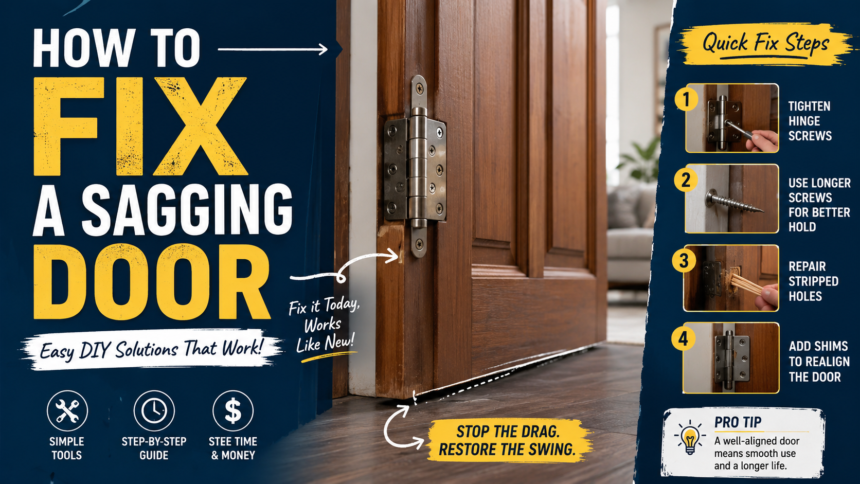
A door that drags on the floor, sticks when opening, or refuses to close properly can be frustrating. The good news is that most sagging doors can be repaired without replacing the entire door or hiring a professional. Learning how to fix a sagging door can save you time, money, and daily annoyance.
- Signs That Your Door Is Sagging
- Why Doors Sag Over Time
- Tools You May Need
- Method 1: Tighten the Hinge Screws
- Method 2: Replace Short Screws with Longer Ones
- Method 3: Repair Stripped Screw Holes
- Method 4: Adjust the Hinges
- Method 5: Shim the Hinges
- Method 6: Sand the Problem Area
- Method 7: Plane the Edge of the Door
- Method 8: Check the Door Frame
- Method 9: Replace Damaged Hinges
- How to Fix a Sagging Front Door
- How Long Does It Take to Fix a Sagging Door?
- Common Mistakes to Avoid
- Preventing Future Door Sagging
- When to Call a Professional
- Final Thoughts
A sagging door usually happens because the hinges become loose, screws wear out, the door frame shifts, or the door’s weight pulls it out of alignment over time. Even a small shift can cause noticeable problems.
As many homeowners discover, “a door doesn’t suddenly stop working overnight—it slowly moves out of place until the problem becomes impossible to ignore.”
This guide explains how to fix a sagging door using simple tools and practical methods that work for most interior and exterior doors.
Signs That Your Door Is Sagging
Before you start repairs, make sure the door is actually sagging.
Common signs include:
- The door rubs against the floor.
- The top corner opposite the hinges touches the frame.
- The door sticks when opening or closing.
- You notice uneven gaps around the door.
- The latch no longer lines up with the strike plate.
If you see one or more of these symptoms, it’s time to learn how to fix a sagging door properly.
Why Doors Sag Over Time
Understanding the cause helps you choose the correct repair method.
Loose Hinge Screws
This is the most common reason. Repeated opening and closing gradually loosens the screws holding the hinges.
Even a few millimeters of movement can throw the entire door out of alignment.
Heavy Door Weight
Solid wood and exterior doors are heavier than standard interior doors.
Over time, gravity pulls the door downward, putting stress on the upper hinge.
Worn-Out Screw Holes
Sometimes the screws are tight, but the wood inside the frame is stripped.
In this situation, tightening the screws won’t solve the issue.
House Settling
Homes naturally settle over the years.
This slight movement can shift door frames and create alignment problems.
Moisture and Humidity
Wood expands and contracts as humidity changes.
This movement may cause a door to sag or stick during certain seasons.
Tools You May Need
Most repairs require only basic household tools.
- Screwdriver
- Drill
- Wood screws
- Wood glue
- Wooden toothpicks
- Sandpaper
- Hammer
- Utility knife
- Hinge shims
- Carpenter’s level
Having these tools ready makes how to fix a sagging door much easier.
Method 1: Tighten the Hinge Screws
Start with the simplest solution first.
Open the door and inspect all hinge screws. Focus especially on the top hinge because it supports most of the door’s weight.
Use a screwdriver to tighten every screw firmly.
Avoid overtightening, as this can damage the screw holes.
After tightening, test the door several times. In many cases, this simple fix restores proper alignment immediately.
Method 2: Replace Short Screws with Longer Ones
If tightening doesn’t help, the screws may not be gripping enough wood.
Remove one screw from the upper hinge and replace it with a 3-inch wood screw.
The longer screw reaches deeper into the wall framing behind the door jamb.
This extra support helps pull the door back into position.
Many professionals consider this the fastest and most effective technique for how to fix a sagging door.
Method 3: Repair Stripped Screw Holes
Sometimes the screw holes become too large to hold screws securely.
To fix this:
- Remove the loose screw.
- Insert several wooden toothpicks coated with wood glue into the hole.
- Break off the excess.
- Let the glue dry completely.
- Reinstall the screw.
The toothpicks create fresh material for the screw to grip.
This inexpensive repair often works surprisingly well.
Method 4: Adjust the Hinges
Bent or misaligned hinges can contribute to sagging.
Examine each hinge carefully.
Look for:
- Bent hinge leaves
- Loose hinge pins
- Visible gaps between hinge parts
If necessary, remove the hinge and gently bend it back into shape using pliers.
Small hinge adjustments can dramatically improve door alignment.
Method 5: Shim the Hinges
A hinge shim is a thin piece of material placed behind a hinge.
Shims help reposition the door without major repairs.
To install a shim:
- Remove the hinge screws.
- Place a thin shim behind the hinge.
- Reinstall the screws.
- Test the door.
Adding a shim behind the lower hinge can lift a sagging corner.
This method is often recommended when learning how to fix a sagging door because it requires minimal effort.
Method 6: Sand the Problem Area
Sometimes the door itself is rubbing due to minor sagging.
If structural adjustments don’t completely solve the issue, sanding may help.
Close the door slowly and identify the rubbing point.
Use sandpaper to remove small amounts of material.
Work gradually and test frequently.
Removing too much wood can create visible gaps.
Method 7: Plane the Edge of the Door
For more severe rubbing, a hand planer may be needed.
Mark the area causing contact with the frame or floor.
Carefully shave away a small amount of wood.
Make slow, controlled passes rather than removing large sections at once.
This method is especially useful for older wooden doors.
Method 8: Check the Door Frame
If the hinges are secure but the problem remains, inspect the frame.
Look for:
- Cracks
- Warping
- Loose trim
- Signs of settling
Use a level to check whether the frame remains square.
Frame issues can sometimes mimic door sagging.
Addressing the frame may be necessary before the door can function correctly.
Method 9: Replace Damaged Hinges
Hinges wear out over time.
If the hinges show rust, cracks, or excessive play, replacement may be the best solution.
Choose new hinges that match the size and weight requirements of the door.
Installing quality hinges provides better support and prevents future sagging.
As the saying goes, “A strong door is only as reliable as the hinges holding it.”
How to Fix a Sagging Front Door
Front doors are usually heavier than interior doors.
For exterior doors:
- Check all hinge screws carefully.
- Use long structural screws.
- Inspect for weather-related expansion.
- Verify that the frame remains level.
Because front doors experience constant use and changing weather conditions, they often require more robust repairs.
When considering how to fix a sagging door on an entryway, strengthening the top hinge is usually the most effective starting point.
How Long Does It Take to Fix a Sagging Door?
Repair time depends on the cause.
Approximate timelines:
| Repair Method | Estimated Time |
|---|---|
| Tightening screws | 5–10 minutes |
| Replacing screws | 10–20 minutes |
| Repairing stripped holes | 30–60 minutes |
| Shimming hinges | 20–30 minutes |
| Sanding door edge | 20–40 minutes |
| Replacing hinges | 30–60 minutes |
Most homeowners can complete basic repairs in less than an hour.
Common Mistakes to Avoid
Many DIY repairs fail because of simple mistakes.
Avoid these common errors:
- Ignoring the top hinge.
- Using screws that are too short.
- Sanding too much material.
- Replacing the door before diagnosing the cause.
- Tightening damaged screws repeatedly.
- Forgetting to check frame alignment.
A careful inspection often saves significant time and effort.
Preventing Future Door Sagging
Once you’ve learned how to fix a sagging door, you’ll also want to prevent the issue from returning.
Helpful maintenance tips:
- Tighten hinge screws annually.
- Lubricate hinges regularly.
- Avoid slamming doors.
- Replace worn hardware promptly.
- Monitor humidity levels indoors.
- Inspect heavy doors every few months.
Regular maintenance can keep a door functioning properly for many years.
When to Call a Professional
Most sagging doors can be repaired by homeowners.
However, professional help may be needed if:
- The frame is severely warped.
- Structural settling affects multiple doors.
- The door is extremely heavy.
- Previous repairs have failed repeatedly.
In these situations, a professional can identify underlying structural issues.
Final Thoughts
Learning how to fix a sagging door is one of the most useful home maintenance skills. In many cases, the problem is caused by loose screws, worn hinge holes, or minor alignment issues that can be fixed with simple tools.
Start with the easiest solutions first—tightening screws and replacing short fasteners often solve the problem immediately. If the issue persists, methods such as shimming hinges, repairing stripped holes, or replacing worn hardware can restore smooth operation.
A properly aligned door should open effortlessly, close securely, and move without rubbing. With the right approach, most sagging doors can be repaired in less than an hour, saving both money and frustration.
Also Read: Media Watcher